Parents hear a lot of recommendations at pediatric dental visits, and it’s not always obvious which ones are essential and which are optional extras. Sealants tend to fall into that grey area. They’re not treating a problem your child already has, which makes it easy to wonder whether they’re worth doing at all, or just another add-on to the bill.
The short answer is that sealants are one of the more genuinely useful preventive steps in children’s dentistry, backed by decades of research rather than marketing. But the “why” and “when” matter, and that’s worth understanding before you say yes at your next appointment.
What Dental Sealants Actually Are
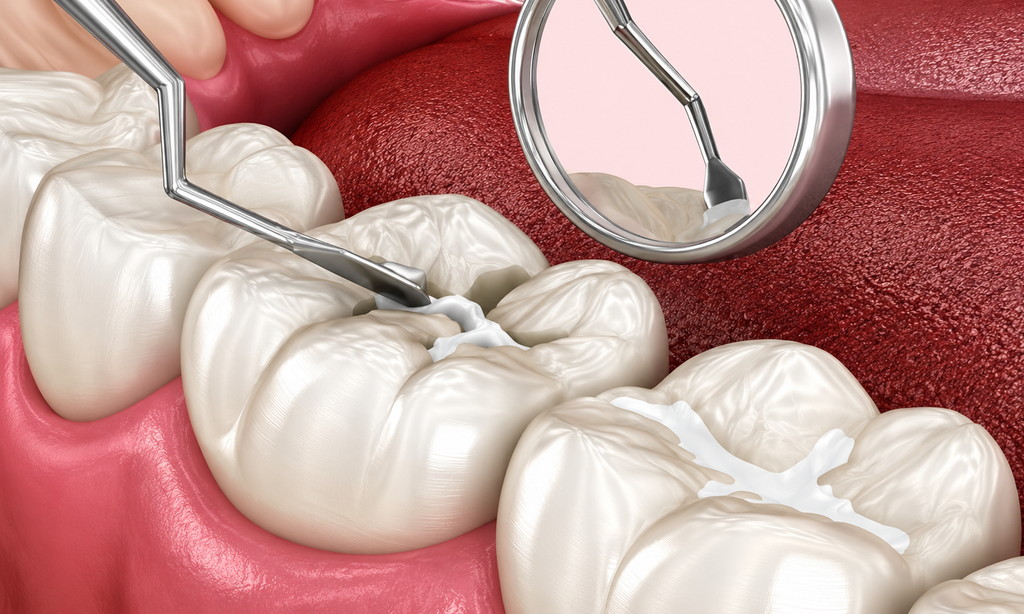
A sealant is a thin protective coating, usually a tooth-coloured resin, painted onto the chewing surface of a back tooth, typically a molar or premolar. Those back teeth aren’t flat. They have narrow grooves and pits where food particles and bacteria can hide, often too small for a toothbrush bristle to properly reach even with good brushing habits.
The sealant flows into those grooves and hardens into a smooth barrier, essentially closing off the spaces where decay tends to start in the first place. It’s not a treatment. It’s prevention, applied before a problem exists rather than after.
Do They Actually Work?
This is really the heart of the question most parents are asking, even if it’s phrased differently. The research here is fairly consistent: sealed molars show significantly less decay than unsealed ones, with studies pointing to a reduction of around 80 percent in the first two years after application, and continued protection against roughly half of cavities for up to four years after that.
Children without sealants have been shown to develop cavities at nearly three times the rate of children with them, particularly in those first permanent molars that come in around age six. That’s a meaningful gap, especially considering how much harder those back teeth are to clean thoroughly during the years kids are still developing proper brushing technique.
None of this makes sealants a replacement for brushing, flossing, or a sensible diet. They work best as one part of a broader prevention routine, not a substitute for it.
Why Kids Specifically Benefit So Much
A few things make children particularly good candidates for sealants, more so than adults:
- Permanent molars are newly erupted and haven’t yet had years of exposure to natural enamel-strengthening processes
- Brushing technique is still developing, and those deep grooves are genuinely hard to clean even with a careful effort
- Diets tend to include more frequent sugary snacks and drinks, especially around school schedules
- The cavity-prone window, roughly ages 6 through 14, lines up almost exactly with when permanent molars and premolars are coming in
Because of that timing, most dentists recommend sealants as soon as the relevant back teeth erupt, rather than waiting until a cavity shows up as the reason to act.
What the Appointment Actually Looks Like
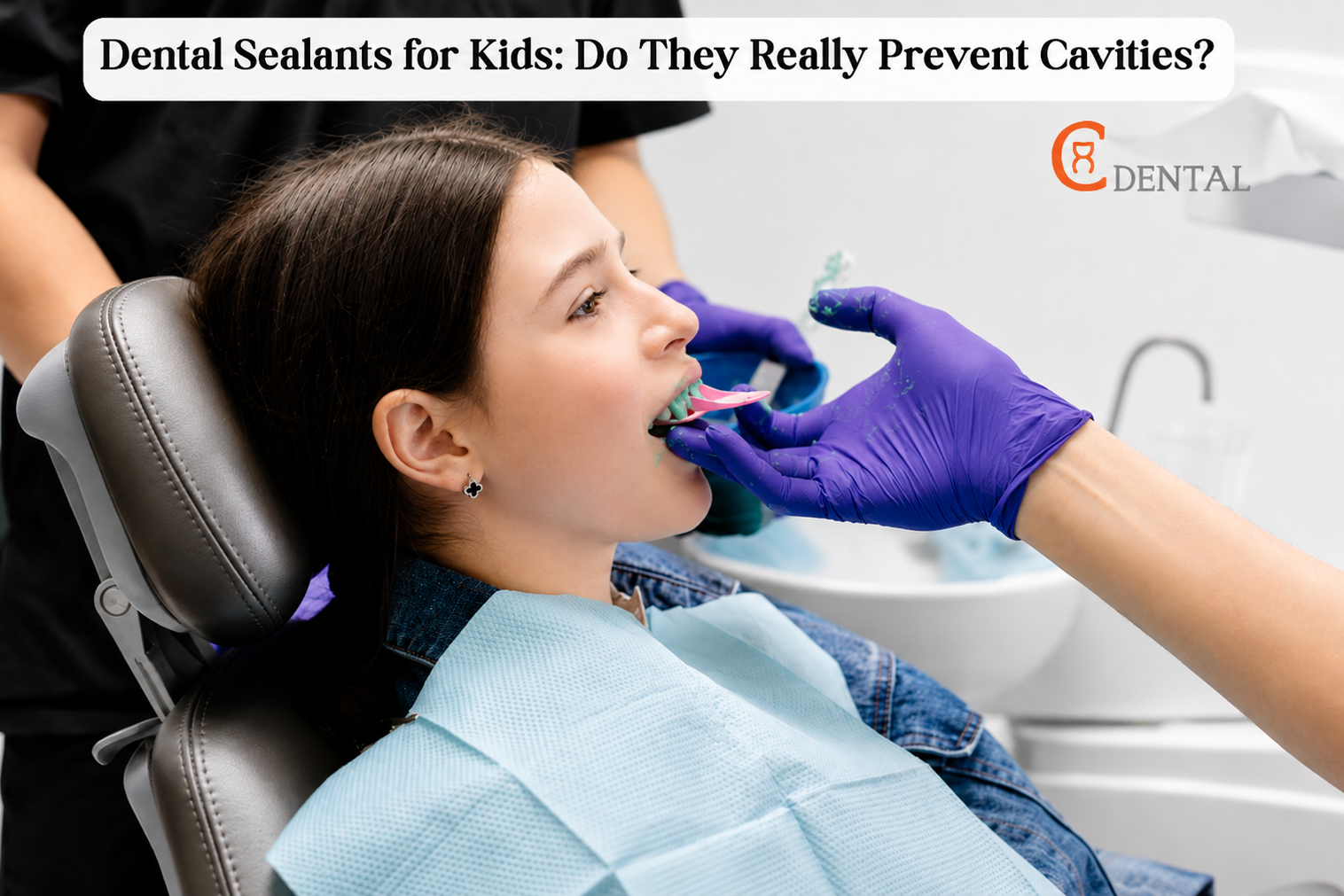
One thing that tends to reassure hesitant parents is how simple the process is. Applying a sealant is quick, painless, and doesn’t involve any drilling or anaesthesia. In a single visit, the dentist will:
- Clean and dry the tooth thoroughly
- Apply a mild solution that helps the sealant bond to the enamel
- Rinse and dry the tooth again
- Paint the sealant material into the grooves of the tooth
- Use a curing light to harden it in place, usually taking less than a minute per tooth
Most kids handle it without any discomfort, and it’s often done as a routine addition during a regular check-up rather than a separate appointment altogether.
Sealants vs. Fillings: What’s the Actual Difference?
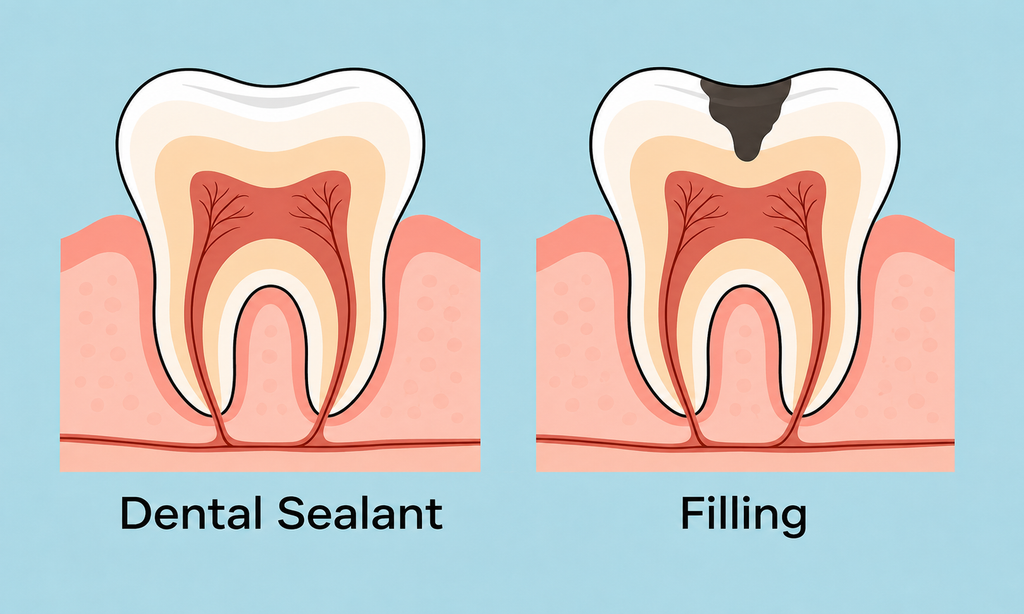
It’s a fair question, since both involve putting a material onto a tooth. But they’re solving completely different problems.
A sealant is preventive. It’s applied to a healthy tooth to stop decay from starting in the first place, and it only coats the outer chewing surface.
A filling is restorative. It’s used after decay has already damaged part of the tooth, involves removing the decayed portion first, and then filling that space to restore the tooth’s structure and function.
In other words, a sealant is about avoiding the conversation about fillings altogether. If a cavity has already formed, a sealant isn’t the right tool anymore, a filling is. That’s really the simplest way to think about which one applies: sealants come before a problem exists, fillings come after.
Are Sealants Actually Worth It?
For most children, yes, and the reasoning tends to hold up well against scrutiny. The upfront cost of a sealant is consistently lower than the cost of treating a cavity later, and that’s before factoring in the discomfort a child avoids by not developing decay in the first place. There’s also a quieter benefit worth mentioning: children who avoid early cavities tend to have more positive experiences with dental visits overall, which shapes how comfortable they are with dental care as they get older.
The main exceptions are children with very low cavity risk, well-established brushing habits, and teeth without deep grooves, where the benefit is naturally smaller. Even then, most pediatric dentists will walk you through the specific risk factors for your child rather than applying a blanket recommendation.
How Long Do They Last, and Do They Need Maintenance?
Sealants typically last several years, though they should be checked at regular dental visits since they can wear down or chip over time, particularly with heavy chewing. If a sealant does wear away, it can simply be reapplied, and it doesn’t damage the underlying tooth in any way. Good oral hygiene, brushing twice daily with fluoride toothpaste and regular flossing, helps sealants last as long as possible and works alongside them rather than being replaced by them.
Frequently Asked Questions
Q: At what age should my child get dental sealants?
A: Most dentists recommend sealants as soon as the first permanent molars erupt, usually around age six, and again when the second molars come in around age twelve.
Q: Are dental sealants safe?
A: Yes. Sealants have been used safely in dentistry for decades and are made from materials specifically designed for long-term use in the mouth.
Q: Can sealants be applied to baby teeth?
A: In some cases, yes, particularly if a baby tooth has deep grooves and needs to stay healthy long enough to hold space for the permanent tooth coming in behind it.
Q: Do sealants hurt cavities that already exist?
A: No. Sealants are meant for healthy teeth. If decay is already present, a filling is the appropriate treatment instead.
Q: Will my child still need to brush and floss if they have sealants?
A: Absolutely. Sealants reduce risk on the specific surfaces they cover, but they don’t protect the rest of the tooth or the surrounding gums, so regular brushing and flossing remain essential.
Sealants at C Dental Clinic
At C Dental Clinic in Al Nahda, Sharjah, sealants are one of the preventive treatments we regularly recommend for children as their permanent molars come in, based on a straightforward evaluation of their individual cavity risk rather than a one-size-fits-all rule. If you’re weighing whether it’s the right step for your child, that’s exactly the kind of question worth bringing to a check-up rather than deciding on your own.
👉 Book a consultation at C Dental Clinic to find out if sealants are right for your child.