Tag: jaw pain

  • Night Guards for Teeth Grinding: Do You Really Need One?

    Night Guards for Teeth Grinding: Do You Really Need One?

    Waking up with a sore jaw or a dull headache you can’t quite explain is one of those things people tend to live with for months before mentioning it to anyone, let alone a dentist. It’s easy to blame a bad pillow, poor sleep, or just stress from the week. Sometimes that’s exactly what it is. Other times, the real cause is happening every night without you ever being awake for it.

    Teeth grinding, known clinically as bruxism, is far more common than most people realize, and a night guard is usually the first thing a dentist recommends once it’s identified. Whether you actually need one, though, depends on a few things worth understanding first.

    What Bruxism Actually Is
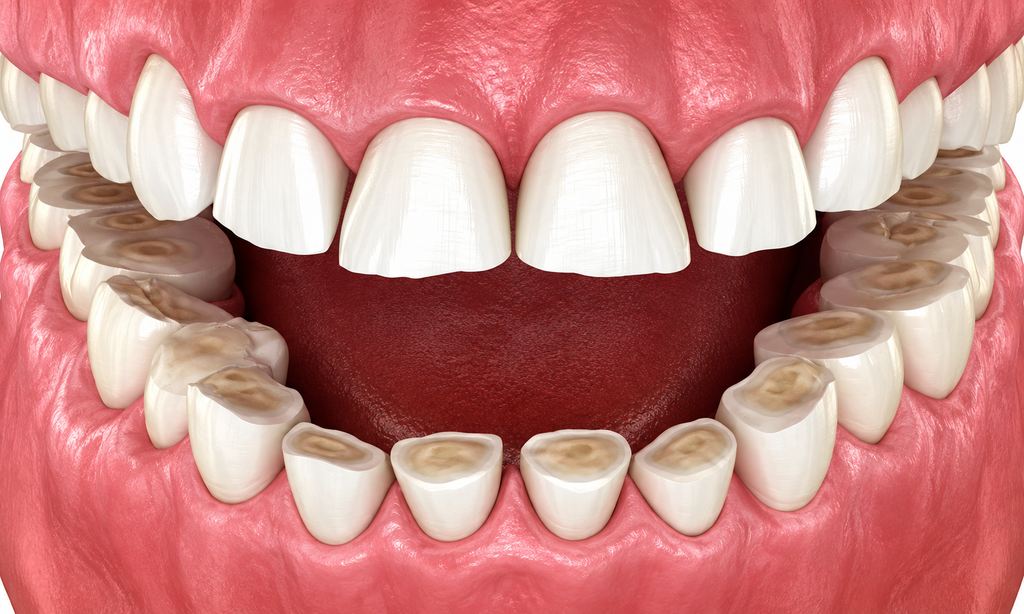
    Illustration of teeth showing enamel wear caused by bruxism

    Bruxism is the involuntary clenching, grinding, or gnashing of teeth, and it comes in two forms. Awake bruxism happens during the day, often tied to concentration, stress, or anxiety, and tends to show up as clenching rather than the back-and-forth grinding motion. Sleep bruxism happens at night, is classified as a sleep-related movement disorder, and is the type most people are completely unaware they’re doing until a partner mentions the sound, or a dentist spots the wear during a check-up.

    The exact cause isn’t fully understood, but a combination of factors tends to be involved: stress and anxiety, certain sleep disorders, misaligned teeth or an uneven bite, and in some cases, side effects from specific medications. There’s also a growing body of research linking sleep bruxism to obstructive sleep apnea, which is part of why persistent grinding sometimes warrants a broader look at sleep health, not just a dental one.

    Signs You Might Be Grinding Your Teeth

    Because sleep bruxism happens while you’re unconscious, most people find out indirectly, through symptoms rather than catching themselves in the act. Common signs include:

    • Waking up with a sore or tight jaw
    • Dull headaches, especially around the temples, first thing in the morning
    • Teeth that feel more sensitive than usual
    • Visible wear, flattening, or chipping on your teeth
    • A partner mentioning they’ve heard grinding sounds at night
    • Jaw clicking or discomfort that seems worse in the morning
    • Small indentations along the edges of your tongue
    • Occasional pain that feels like it’s coming from your ear, without any actual ear problem

    None of these symptoms alone confirms bruxism, since several overlap with other issues, but a pattern of two or three together is usually enough for a dentist to take a closer look during your next visit.

    Why It’s Worth Taking Seriously

    Occasional, mild grinding usually isn’t something to worry about, and plenty of people brux from time to time without it ever causing real damage. The concern is with frequent or intense grinding, which over months and years can lead to genuinely significant problems: worn-down enamel, cracked or chipped teeth, loosened teeth, and ongoing strain on the jaw joint that can contribute to temporomandibular joint issues.

    Left unaddressed long enough, the dental work needed to repair grinding-related damage tends to be far more involved, and more expensive, than the treatment that could have prevented it in the first place.

    How a Night Guard Actually Helps
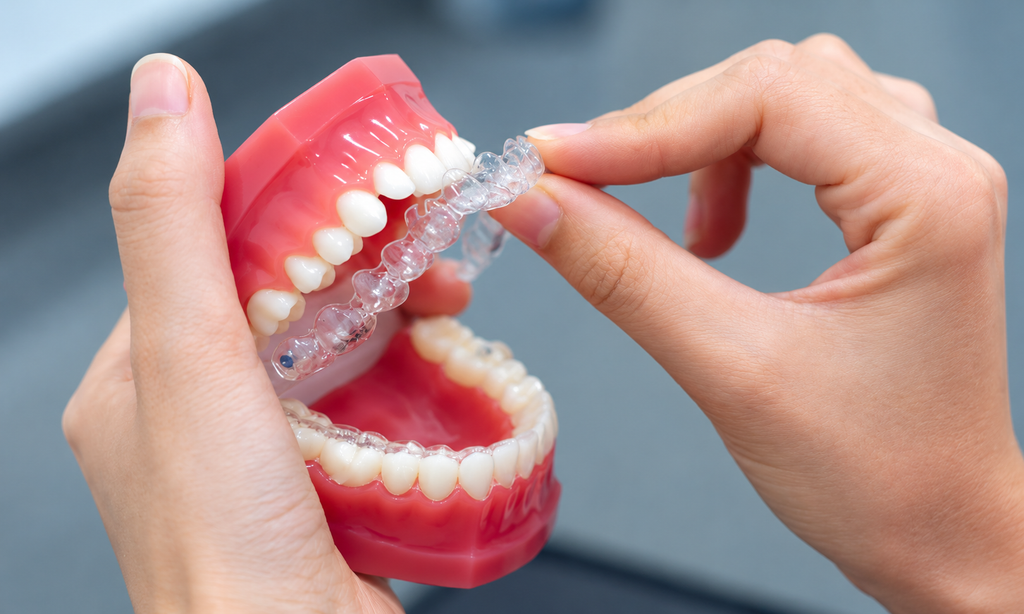
    Night guard being placed over a dental model showing upper and lower teeth

    A night guard, sometimes called a mouth guard or occlusal splint, is a device worn while sleeping that creates a physical barrier between your upper and lower teeth. It doesn’t stop the underlying urge to grind, but it absorbs and distributes the force so your teeth aren’t wearing directly against each other. Over time, this protects enamel from erosion, reduces the risk of chips and cracks, and for many patients, eases the muscle tension that leads to jaw soreness and morning headaches.

    Some night guards are also designed to slightly reposition the jaw into a more relaxed alignment, which can further reduce strain on the jaw joint and surrounding muscles, beyond just cushioning the teeth themselves.

    Custom Night Guards vs. Store-Bought Options

    This is a genuinely common question, since over-the-counter guards are cheap and easy to find at any pharmacy. They can offer some short-term relief, but they come with real trade-offs. Generic guards are bulkier, don’t fit the specific shape of your teeth or bite, and can actually be uncomfortable enough that people stop wearing them within weeks.

    A custom-fitted night guard, made from an impression of your own teeth, sits far more precisely, feels less intrusive, and lasts considerably longer with proper care. It’s also made with your specific bite and grinding pattern in mind, rather than a generic average. For anyone dealing with moderate to severe bruxism, or noticeable dental wear already, a custom guard is almost always the better long-term investment, both for comfort and for how well it actually protects your teeth.

    Do You Really Need One?

    Not everyone who occasionally clenches their jaw needs a night guard. If grinding is mild, infrequent, and not causing any symptoms or visible wear, your dentist may simply monitor it at future check-ups rather than recommend treatment right away.

    A night guard becomes genuinely worth it when:

    • You’re waking up with regular jaw pain or headaches
    • A dentist has noticed visible wear, flattening, or damage on your teeth
    • Your partner has mentioned hearing grinding at night
    • You already have cracked, chipped, or sensitive teeth that grinding could be making worse
    • Previous dental work, like crowns or fillings, is at risk of damage from ongoing grinding

    If any of that sounds familiar, it’s worth bringing up at your next appointment rather than waiting for damage to become obvious on its own.

    Beyond the Night Guard: Managing the Root Cause

    A night guard protects your teeth, but it doesn’t necessarily address why the grinding is happening in the first place, particularly when stress is a major factor. Alongside a night guard, a few things often help:

    • Stress management techniques, including relaxation exercises, better sleep habits, or even therapy for underlying anxiety
    • Cutting back on caffeine and alcohol, especially in the evening, since both are known to worsen grinding for some people
    • Addressing sleep quality generally, and getting evaluated for sleep apnea if grinding is paired with loud snoring or daytime fatigue
    • Correcting bite misalignment, if that’s identified as a contributing factor, through orthodontic or restorative treatment

    For most patients, the night guard and these broader lifestyle adjustments work together, rather than one replacing the other.

    Custom Mouth Guards in Sharjah at C Dental Clinic
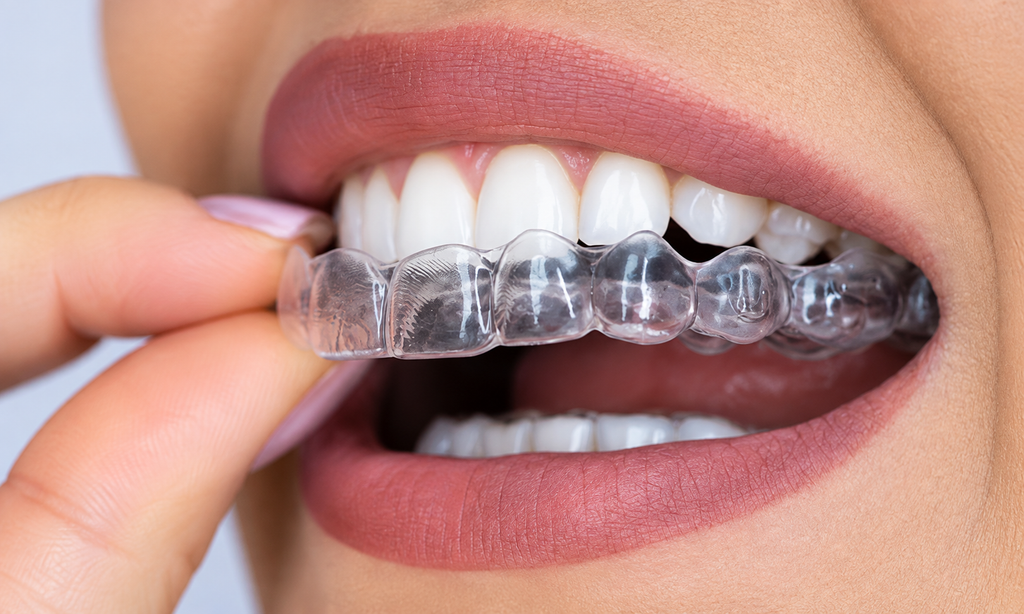
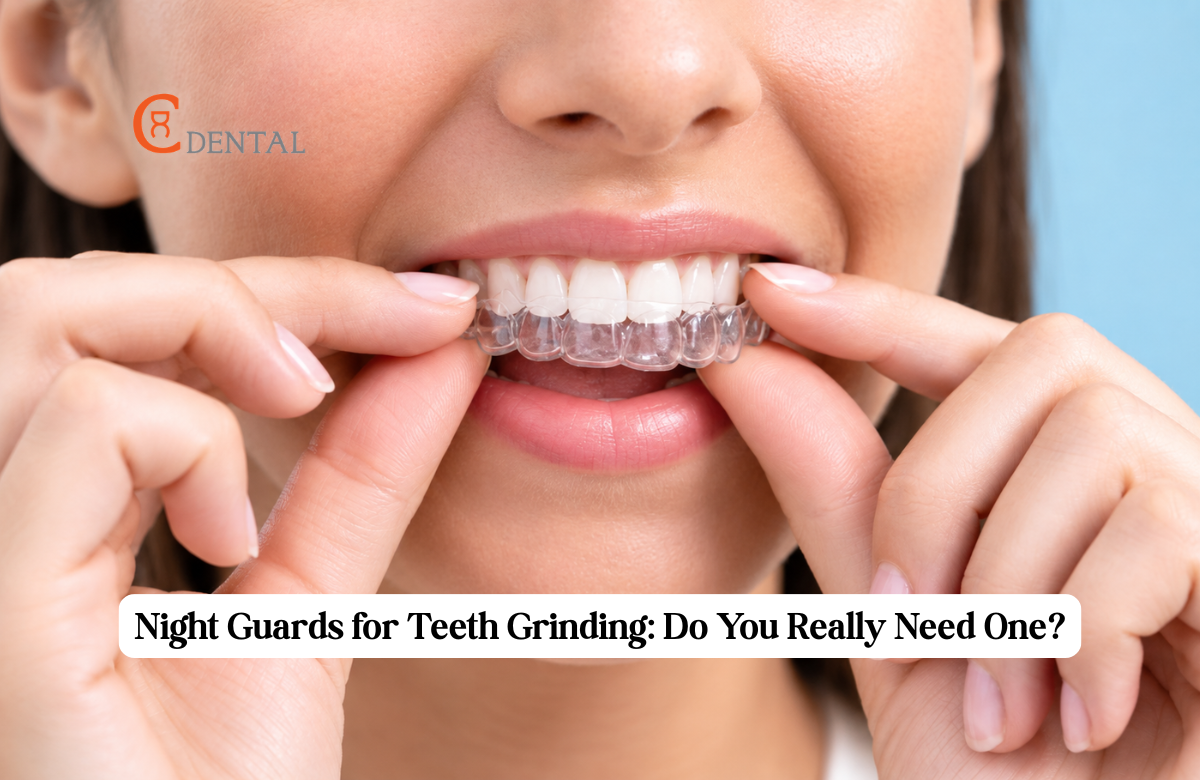
    Close-up of a custom night guard being fitted over the teeth

    At C Dental Clinic in Al Nahda, Sharjah, a custom night guard starts with a proper evaluation, checking for the specific wear patterns, bite alignment, and jaw discomfort that point toward bruxism, rather than assuming every case looks the same. From there, an impression is taken and the guard is made to fit your teeth precisely, so it’s comfortable enough to actually wear every night, which is really where the protection comes from.

    Frequently Asked Questions

    Q: How long does it take to get used to wearing a night guard?

    A: Most people adjust within a week or two. It can feel unfamiliar at first, but a well-fitted custom guard is generally far more comfortable than people expect.

    Q: Will a night guard stop me from grinding my teeth entirely?

    A: Not necessarily. It protects your teeth from the damage grinding causes, but it doesn’t always eliminate the underlying habit, which is why addressing stress or other root causes alongside it matters.

    Q: How long does a custom night guard last?

    A: With proper care, a custom night guard typically lasts several years, though it should be checked periodically for wear, particularly if grinding is severe.

    Q: Can children need night guards too?

    A: Yes, teeth grinding is fairly common in children, though it often resolves on its own as adult teeth come in. A dentist can advise whether a guard is genuinely needed in a child’s case.

    Q: Is teeth grinding always caused by stress?

    A: Not always. While stress is a common trigger, sleep disorders, bite misalignment, and even certain medications can also play a role, which is part of why a proper evaluation matters rather than assuming stress is the only cause.

    When to Stop Ignoring It

    A sore jaw or a morning headache is easy to brush off as just another symptom of a busy week. But if it’s happening regularly, or your teeth are showing visible wear, it’s worth getting checked rather than waiting for the damage to become harder to reverse.

    👉 Book a consultation at C Dental Clinic to find out if a custom night guard is right for you.
    References

    1. Cleveland Clinic — Bruxism (Teeth Grinding): Symptoms, Causes and Treatment
    2. American Dental Association — Bruxism: Teeth Grinding
    3. Colgate Oral Care — Do I Need a Night Guard for Teeth Clenching?

  • TMJ Disorder Explained: Why Your Jaw Hurts and What to Do About It

    TMJ Disorder Explained: Why Your Jaw Hurts and What to Do About It

    Jaw pain has a way of showing up quietly. It might start as a slight click when you open your mouth wide, or a dull ache near your ear after a long day of talking. Most people brush it off at first. Then one morning it’s harder to chew breakfast without discomfort, and suddenly the question isn’t whether something’s wrong, it’s what exactly is going on.

    More often than not, the answer is TMJ disorder, one of the most common jaw problems dentists see, and also one of the most misunderstood.

    What Is the TMJ, Exactly?

    TMJ stands for temporomandibular joint, the small hinge that connects your lower jaw to your skull, sitting just in front of each ear. You have two of them, one on each side, and they work together every time you talk, chew, yawn, or even swallow. It’s an unusually busy joint, used thousands of times a day without most people ever thinking about it.

    A temporomandibular disorder, often shortened to TMD or just called “TMJ” for simplicity, is what happens when that joint or the muscles around it stop working the way they should. It’s not one single condition but a group of related problems, which is part of why symptoms can look so different from one person to the next.

    Common Symptoms of TMJ Disorder

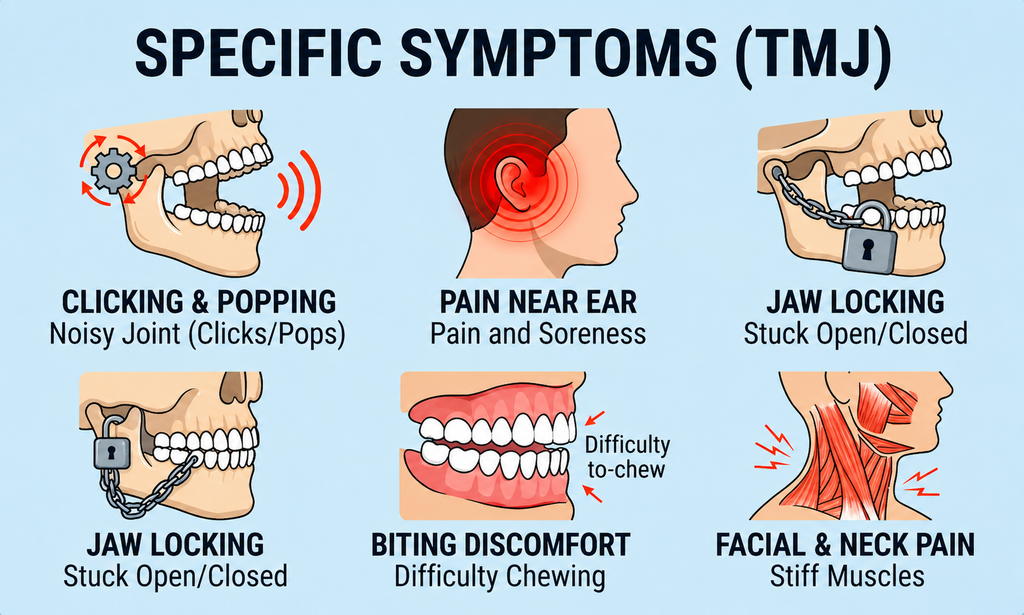
    Six common TMJ disorder symptoms: clicking, jaw locking, ear pain, biting discomfort, and facial pain

    Not everyone experiences TMJ problems the same way, but a few signs tend to show up again and again:

    • Pain or tenderness in the jaw, especially near the ear
    • A clicking, popping, or grinding sound when opening or closing your mouth
    • Difficulty or discomfort chewing, particularly with harder foods
    • Jaw locking, either open or closed, even briefly
    • Headaches, often mistaken for tension headaches
    • Earaches or a feeling of fullness in the ear, without any actual ear infection
    • Facial pain or aching that spreads toward the temple or neck
    • A bite that suddenly feels slightly “off,” as though your upper and lower teeth aren’t meeting the way they used to

    Symptoms can appear on one side or both, and they tend to come and go rather than stay constant, which is often why people wait longer than they should before getting it checked.

    What Actually Causes TMJ Disorder

    This is where TMJ gets a little more complicated. Dentists and researchers still don’t point to one single cause. Instead, it’s usually a combination of factors that puts extra strain on the joint or the muscles around it. The most common contributors include:

    Jaw clenching or teeth grinding: Known clinically as bruxism, this is one of the biggest drivers of TMJ pain, especially when it happens at night without the person realizing it.

    Stress: It sounds unrelated to jaw pain, but stress often shows up physically as a tightened jaw or clenched teeth, sometimes without any conscious awareness.

    Jaw or facial injury: A blow to the face, whiplash, or even a hard fall can shift the joint out of its normal position or damage the surrounding tissue.

    Joint wear over time: Like other joints in the body, the TMJ has cartilage that can wear down with age or repeated strain, leading to friction and discomfort.

    Bite misalignment: When the upper and lower teeth don’t meet evenly, the jaw muscles can end up compensating in ways that create ongoing tension.

    Arthritis: Certain forms of arthritis can affect the TMJ the same way they affect other joints in the body.

    For most people, it isn’t a single dramatic event, it’s a slow build of one or more of these factors over months or years, until the symptoms finally become hard to ignore.

    Is It TMJ, or Something Else?

    Jaw pain doesn’t always mean TMJ disorder, and that’s part of why a proper evaluation matters rather than guessing at home. A toothache, a sinus issue, or even an ear infection can sometimes feel remarkably similar. A few things tend to point specifically toward TMJ:

    • The pain is closely tied to jaw movement, worse with chewing or talking
    • There’s an audible click or pop when opening your mouth
    • You notice jaw stiffness first thing in the morning, which often points toward nighttime grinding
    • Pressing gently near the joint, just in front of the ear, reproduces the discomfort

    If you’re not sure, that uncertainty itself is a good reason to get it looked at rather than treating it as a guessing game.

    TMJ Treatment: What Actually Helps

    The reassuring part about TMJ disorder is that most cases respond well to conservative treatment, and surgery is rarely the first step or even necessary at all. Treatment is usually built around addressing whatever is driving the strain on the joint.

    Lifestyle adjustments. Softer foods for a period, avoiding wide yawns or excessive gum chewing, and being mindful of clenching during the day can ease symptoms noticeably on their own.

    Night guards. For patients who grind their teeth while sleeping, a custom-fitted night guard is one of the most effective and commonly used treatments, protecting the joint from that repeated pressure.

    Physical therapy and jaw exercises. Gentle stretching and strengthening exercises, sometimes combined with heat or ultrasound therapy, can improve joint mobility and reduce muscle tension over time.

    Stress management. Since clenching is so often linked to stress, addressing that underlying trigger can meaningfully reduce symptoms, even without any dental intervention at all.

    Medication. Anti-inflammatory pain relievers or, in some cases, muscle relaxants can help manage flare-ups while other treatments take effect.

    Bite correction. If misalignment is contributing to the problem, your dentist may recommend adjustments to how your teeth meet, which can relieve the extra pressure your jaw muscles have been compensating for.

    Surgery exists as an option for the small number of cases that don’t respond to any of the above, but it’s very much a last resort, and a responsible dentist will always start with the least invasive options first.

    TMJ Treatment in Sharjah at C Dental Clinic

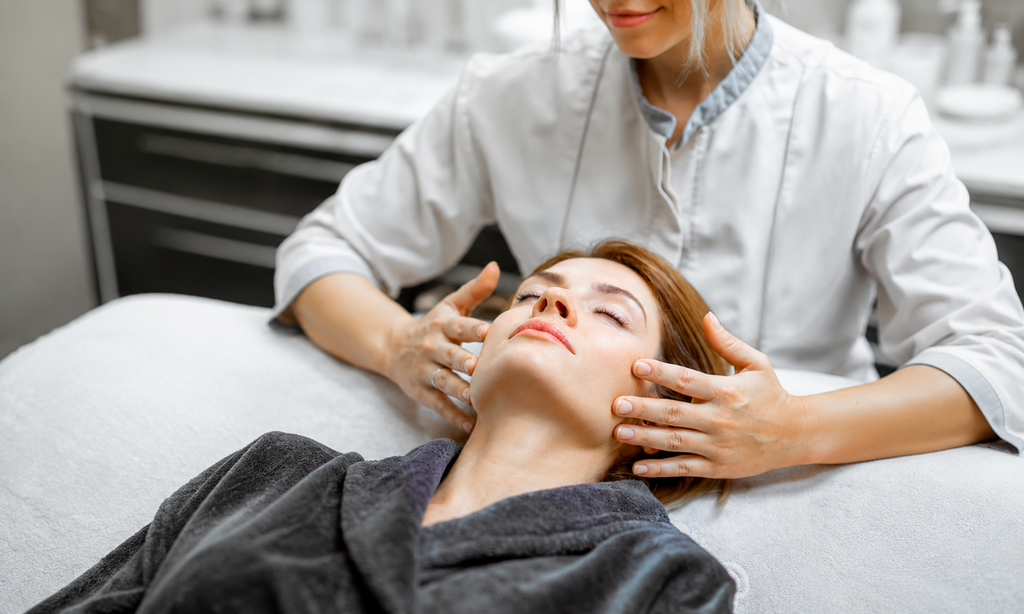
    TMJ treatment consultation at C Dental Clinic in Sharjah

    At C Dental Clinic in Al Nahda, Sharjah, TMJ evaluations start with understanding what’s actually driving your symptoms, not just treating the pain in isolation. That means looking at your bite, checking for signs of grinding, and talking through habits or stress patterns that might be playing a role, before recommending a treatment plan that fits your specific situation.

    Because TMJ disorder can look so different from person to person, there isn’t a one-size-fits-all fix, and that’s exactly why a proper in-person assessment matters more than trying to self-diagnose from a symptom list online.

    Frequently Asked Questions

    Q: Can TMJ disorder go away on its own?

    A: For some people, mild symptoms do ease up without formal treatment, sometimes within a couple of weeks. Persistent or worsening symptoms, though, usually need a proper evaluation rather than waiting it out.

    Q: Is jaw clicking always a sign of TMJ disorder?

    A: Not necessarily. Some clicking without any pain is common and not always a concern. It’s when clicking is paired with pain, locking, or difficulty chewing that it points more clearly toward TMJ disorder.

    Q: Can stress really cause jaw pain?

    A: Yes. Stress frequently leads to unconscious jaw clenching or teeth grinding, particularly during sleep, which puts sustained pressure on the joint and surrounding muscles.

    Q: Do I need a night guard even if I don’t grind my teeth during the day?

    A: Many people grind or clench only at night, without ever realizing it until a dentist notices the wear pattern on their teeth. A night guard is often recommended in exactly this situation.

    Q: When should I see a dentist about jaw pain?

    A: If the pain lasts more than a week or two, keeps recurring, or comes with locking, limited jaw movement, or ear discomfort, it’s worth getting evaluated rather than waiting for it to resolve on its own.

    When to Stop Waiting and Get It Checked

    Jaw pain is easy to dismiss because it rarely feels urgent, at least at first. But TMJ disorder tends to get harder to manage the longer it goes unaddressed, while early intervention is often simple, non-invasive, and genuinely effective.

    If jaw pain, clicking, or headaches have become a regular part of your week, it’s worth a proper look rather than living around it.

    👉 Book a consultation at C Dental Clinic to have your jaw pain properly evaluated.

    References

    1. Mayo Clinic — TMJ Disorders: Symptoms and Causes
    2. Cleveland Clinic — Temporomandibular Disorders (TMD) Overview
    3. WebMD — TMJ Disorder: Symptoms, Causes, and Treatment Options