
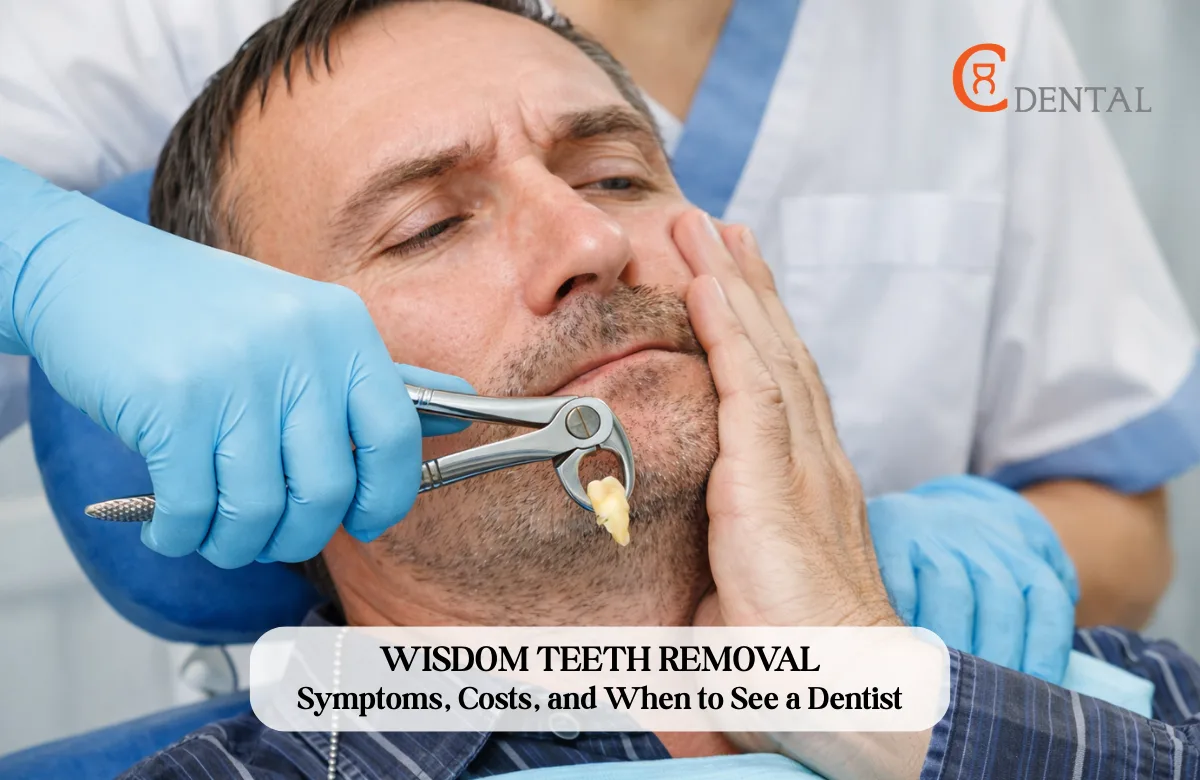
Wisdom teeth are the last set of molars that usually erupt between the ages of 17 and 25. While some people experience no issues, many patients in Sharjah struggle with pain, swelling, or infection due to impacted wisdom teeth. At C Dental Clinic, we frequently treat patients dealing with discomfort caused by partially erupted or misaligned third molars. Understanding the warning signs and treatment options can help you act early and prevent serious complications.
What Are Wisdom Teeth?
Wisdom teeth are the third molars located at the back of your mouth. Because modern jaws are often smaller, there may not be enough space for these teeth to erupt properly. When they don’t emerge fully or grow at an angle, they become impacted, leading to pain and infection.
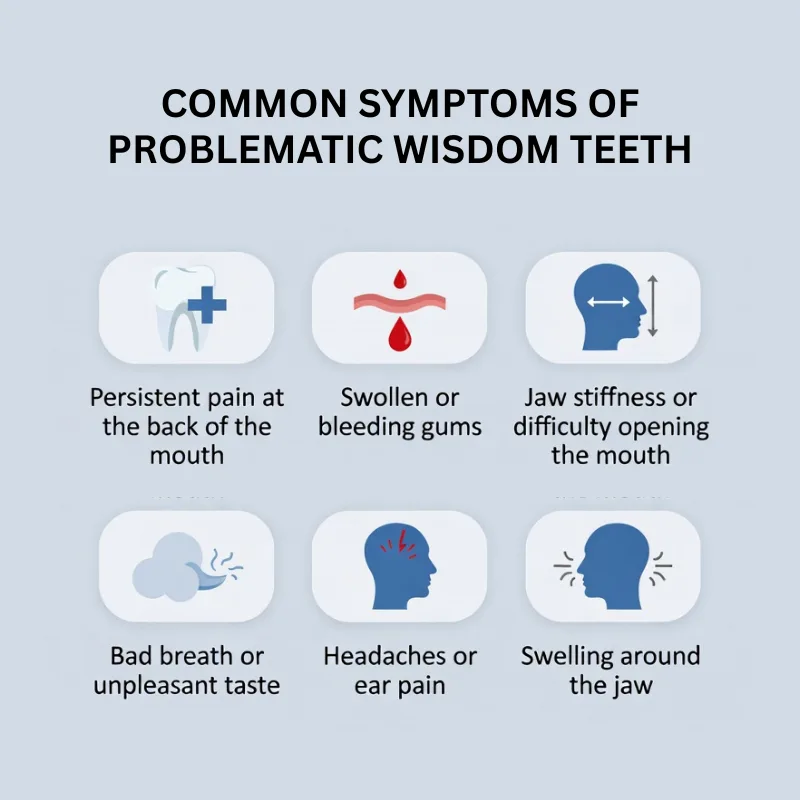
Common Symptoms of Problematic Wisdom Teeth
Many patients ignore early symptoms, thinking the pain will go away on its own. However, untreated wisdom tooth issues can worsen quickly.
Look out for:
- Persistent pain in the back of the mouth
- Swollen or bleeding gums
- Jaw stiffness or difficulty opening your mouth
- Bad breath or unpleasant taste
- Headaches or ear pain
- Swelling around the jaw
If you experience any of these symptoms, a dental evaluation is recommended immediately.
Why Wisdom Teeth Often Need Removal?
Not all wisdom teeth require extraction. However, removal is commonly advised when:
- They are impacted – trapped under the gum or bone.
- They grow sideways – pushing against nearby teeth.
- They cause infection, leading to gum inflammation (pericoronitis).
- They increase the risk of cavities – hard-to-clean areas trap food and bacteria.
- They cause crowding – affecting orthodontic results.
Early removal is often easier and involves quicker recovery compared to waiting until complications develop.
Types of Wisdom Tooth Impaction
Dentists classify impacted wisdom teeth into different types:
- Mesial impaction – tilted toward the front of the mouth (most common)
- Distal impaction – tilted toward the back
- Vertical impaction – straight but stuck under the gum
- Horizontal impaction – lying completely sideways
The treatment plan depends on the position and depth of the tooth.
How is Wisdom Tooth Removal Done?
The procedure varies depending on whether the tooth is fully erupted or impacted.
Simple Extraction
If the tooth has fully erupted, it can be removed with standard extraction techniques under local anesthesia.
Surgical Extraction
For impacted teeth, a small incision is made in the gum. Sometimes the tooth is divided into smaller sections for easier removal. The area is then cleaned and stitched if needed.
The procedure is typically quick, and most patients return home the same day.
Is Wisdom Tooth Removal Painful?
Modern dental techniques make the procedure comfortable. Local anesthesia numbs the area completely. For anxious patients, sedation options may also be available.
Post-procedure discomfort is normal but manageable with prescribed medication. Swelling usually peaks within 48 hours and gradually reduces.
Recovery Timeline After Extraction
Here’s what most patients can expect:
- Day 1–2: Mild swelling and discomfort
- Day 3–4: Swelling begins to reduce
- 1 Week: Stitches removed (if non-dissolvable)
- 2 Weeks: Gums mostly healed
Following aftercare instructions—such as avoiding straws, smoking, and hard foods—helps prevent dry socket, a painful complication.
Cost of Wisdom Teeth Removal in Sharjah
The cost depends on several factors:
- Complexity of impaction
- Number of teeth removed
- Need for surgical extraction
- Type of anesthesia used
Simple extractions cost less than surgical procedures. A proper dental consultation with X-rays is required for an accurate estimate.

When Should You See a Dentist?
You should schedule an appointment if:
- Pain lasts more than 2–3 days
- Swelling spreads to the face or neck
- You develop a fever
- You notice pus or severe bad breath
- You feel pressure affecting nearby teeth
Delaying treatment can lead to serious infections or damage to adjacent teeth.
When Is Wisdom Tooth Removal Necessary?
Wisdom tooth removal becomes necessary when the tooth is causing pain, infection, or has a high risk of future complications. One of the most common reasons is impaction, where the tooth does not have enough space to erupt properly and becomes trapped under the gum or bone. Impacted wisdom teeth can press against nearby molars, leading to pain, swelling, jaw stiffness, and even damage to surrounding teeth.
Removal is also recommended if there are repeated gum infections (pericoronitis), cyst formation around the tooth, tooth decay that cannot be properly cleaned, or bone loss affecting adjacent teeth. In some cases, even if there are no current symptoms, dentists may advise preventive removal when X-rays show that the wisdom tooth is likely to cause problems in the future. Early removal is generally simpler, involves faster healing, and reduces the risk of complex surgical procedures later on.
Frequently Asked Questions
A: A simple wisdom tooth extraction usually takes 20 to 30 minutes. Surgical removal of an impacted wisdom tooth may take 30 to 60 minutes, depending on the tooth’s position and complexity. Most patients return home the same day.
A: Initial healing typically takes about 7 to 10 days. Swelling and discomfort are most noticeable during the first 2 to 3 days and gradually improve. Complete bone healing may take several weeks.
A: Delaying removal can increase the risk of infection, cyst formation, damage to nearby teeth, and more complicated surgery later. If your dentist recommends extraction due to impaction or recurring infection, timely treatment is usually advised.
A: After the procedure, avoid smoking, using straws, spitting forcefully, and eating hard or crunchy foods for several days. Following proper aftercare instructions reduces the risk of dry socket and promotes faster healing.
Final Thoughts
Wisdom teeth problems are common but manageable with timely care. Ignoring symptoms can lead to infection, severe pain, and costly treatments later. If you are experiencing discomfort or want to assess your wisdom teeth, scheduling a consultation can provide clarity and peace of mind.
Early diagnosis, proper imaging, and expert care ensure a smooth and safe removal process with minimal complications.

References
- Wisdom tooth removal– Mayo Clinic
- Removal of Impacted Wisdom Teeth– British Association of Oral and Maxillofacial Surgeons
- Wisdom teeth: Learn More – Should you have your wisdom teeth removed?– National Library of Medicine
- Removal of Wisdom Teeth (Third Molars) – BAOS
Please subscribe to our social channels for updates related to dental care and oral health.
Instagram: cdental2025
Facebook: CDental
YouTube: C-Dental Clinic






Leave a Reply