

Many people notice a strange pattern: during the day their tooth feels normal or only mildly uncomfortable, but as soon as they lie down at night, the pain becomes intense. Nighttime tooth pain can make it difficult to sleep and may signal an underlying dental issue that should not be ignored.
Several biological and environmental factors can make tooth pain feel stronger at night, including changes in blood flow, reduced saliva, and fewer distractions that make pain more noticeable.
If your tooth only hurts at night, understanding the possible causes can help you decide when to seek professional dental care. At C Dental Clinic, dentists frequently treat patients experiencing nighttime tooth pain caused by cavities, infections, or teeth grinding.
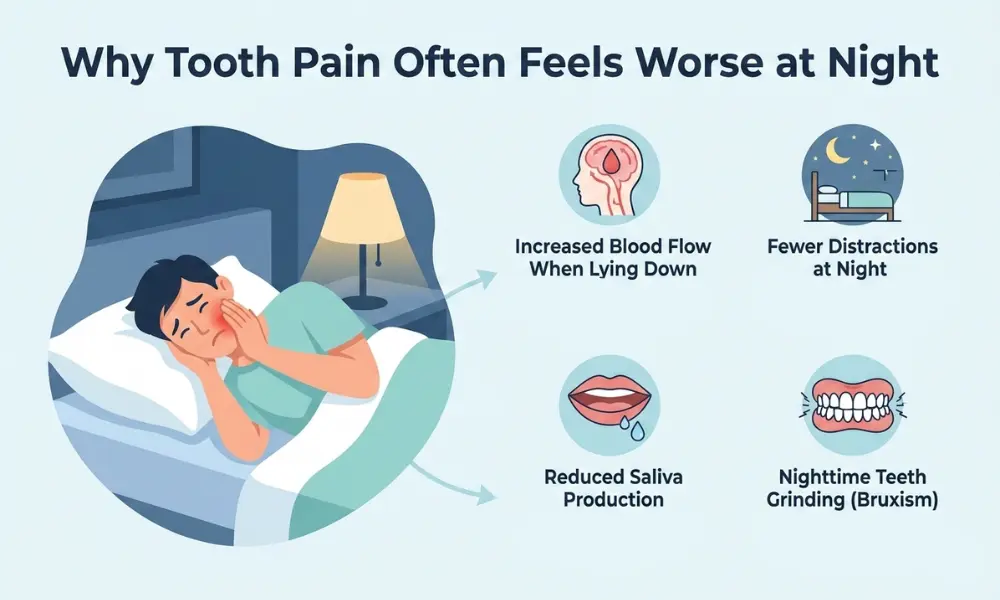
Why Tooth Pain Often Feels Worse at Night?
Nighttime tooth pain is common and usually happens because of natural changes in the body when you lie down to sleep.
Increased Blood Flow When Lying Down
When you lie flat, blood circulation to your head increases. This extra pressure can intensify inflammation in an already irritated tooth nerve, causing throbbing pain that may not be noticeable during the day.
Fewer Distractions
During the day, work, conversations, and daily activities distract your brain from minor discomfort. At night, when everything becomes quiet, your brain focuses more on the pain, making it feel stronger.
Reduced Saliva Production
Saliva helps wash away bacteria and neutralize acids in the mouth. However, saliva production decreases during sleep, which can allow bacteria and irritation to increase.
Nighttime Teeth Grinding
Many people unknowingly grind or clench their teeth while sleeping, a condition known as bruxism. This puts pressure on teeth and jaw muscles and can worsen tooth pain overnight.

Common Causes of Tooth Pain That Appears at Night
If your tooth only hurts at night, it may indicate an underlying dental problem that becomes more noticeable when pressure or inflammation increases.
Tooth Decay or Cavities
One of the most common causes of tooth pain is tooth decay. Cavities damage the protective enamel layer and expose sensitive inner parts of the tooth. When decay reaches deeper layers, the nerve becomes inflamed and painful.
Signs of tooth decay include:
- Sensitivity to hot or cold foods
- Pain when biting
- Visible holes or dark spots on teeth
Tooth Infection or Abscess
A dental abscess is a bacterial infection inside the tooth or gums. It can cause intense throbbing pain that becomes worse when lying down due to increased pressure around the infected area.
Common symptoms include:
- Severe toothache
- Swelling in gums or face
- Bad taste in the mouth
- Fever or fatigue
Dental infections should be treated quickly to prevent complications.
Gum Disease
Inflamed or infected gums can also cause tooth pain that becomes worse at night. Gum disease can expose the sensitive roots of teeth, making them react to temperature changes or pressure.
Signs of gum disease include:
- Bleeding gums
- Swelling or redness
- Persistent bad breath
- Gum recession
Cracked or Damaged Teeth
A small crack in a tooth may not cause noticeable pain during the day. However, when pressure builds up at night, the crack can irritate the inner nerve and trigger discomfort.
Sinus Pressure
Sometimes the pain does not originate from the tooth itself. Sinus infections can create pressure in the upper jaw, causing pain in the molars that feels like a toothache.
How to Relieve Tooth Pain at Night (Temporary Relief)
If your tooth starts hurting at night, several home remedies may help reduce discomfort until you can see a dentist.
Keep Your Head Elevated
Sleeping with extra pillows helps reduce blood pressure around the inflamed tooth and may decrease pain.
Use a Cold Compress
Applying a cold pack to the side of your face for 15–20 minutes can help numb the area and reduce inflammation.
Rinse With Warm Salt Water
Salt water helps clean the mouth and reduce bacteria that may be irritating the tooth or gums.
Take Over-the-Counter Pain Relief
Pain medications may temporarily reduce discomfort, but they do not treat the underlying cause of the problem.
These methods provide only short-term relief. Persistent tooth pain should always be evaluated by a dentist
When Should You See a Dentist?
Nighttime tooth pain should not be ignored, especially if it lasts more than a few days. You should seek dental care immediately if you experience:
- Severe or worsening pain
- Swelling in the gums or face
- Sensitivity to hot or cold that lingers
- Pain when chewing
- Fever or signs of infection
These symptoms may indicate advanced tooth decay or infection that requires professional treatment.
How Dentists Treat Nighttime Tooth Pain
The treatment for tooth pain depends on its cause. After examining your teeth and taking dental X-rays, a dentist may recommend:
- Dental fillings for cavities
- Root canal treatment for infected pulp
- Gum disease treatment
- Repair of cracked or damaged teeth
- Custom night guards for teeth grinding
At C Dental Clinic, dentists focus on identifying the exact cause of nighttime tooth pain and providing personalized treatment to restore comfort and oral health.
How to Prevent Nighttime Toothaches
Good oral hygiene and preventive dental care can reduce the risk of tooth pain.
Helpful tips include:
- Brush twice daily with fluoride toothpaste
- Floss every day to remove plaque between teeth
- Avoid sugary snacks before bedtime
- Wear a night guard if you grind your teeth
- Visit your dentist regularly for checkups and cleaning
Regular dental visits help detect problems early before they become painful.
Frequently Asked Questions
A: Tooth pain often worsens at night due to increased blood flow when lying down, reduced saliva production, and fewer distractions, which makes the pain more noticeable. Teeth grinding during sleep can also contribute
A: Yes, children can experience toothaches at night, often due to cavities, gum issues, or bruxism (teeth grinding). Prompt dental evaluation can prevent complications.
A: The time depends on the cause. Minor cavities or gum issues may be treated in one visit, while infections or root canal treatments may require multiple appointments.
A: You can try keeping your head elevated, using a cold compress, rinsing with warm salt water, or taking over-the-counter pain relief. These provide short-term relief but do not treat the underlying cause.
A: Maintaining good oral hygiene, regular dental checkups, avoiding sugary foods before bedtime, and using a night guard for teeth grinding can help reduce nighttime tooth pain.
Final Thoughts
Tooth pain that appears only at night may seem confusing, but it usually has a clear cause. Changes in blood flow, reduced saliva, and underlying dental problems can all make pain feel stronger once you lie down.
If you frequently experience tooth pain at night, it is important to schedule a dental examination. Early diagnosis and treatment can prevent more serious complications and help you sleep comfortably again.
If you are experiencing persistent tooth pain, the experienced team at C Dental Clinic can help diagnose the problem and recommend the most effective treatment for long-term relief.

References
- My Tooth Hurts at Night But Not During the Day– Causes and Solutions– All Dental Care
- Why Do I Have A Toothache At Night?– Nevada Dentistry & Braces
- What Causes Toothache at Night?– Hawthorn Road Family Dental Clinic
- My Tooth Hurts at Night But Not During the Day– Causes and Solutions– All Care Dental by Sea
Please subscribe to our social channels for updates related to dental care and oral health.
Instagram: cdental2025
Facebook: CDental
YouTube: C-Dental Clinic

Leave a Reply