
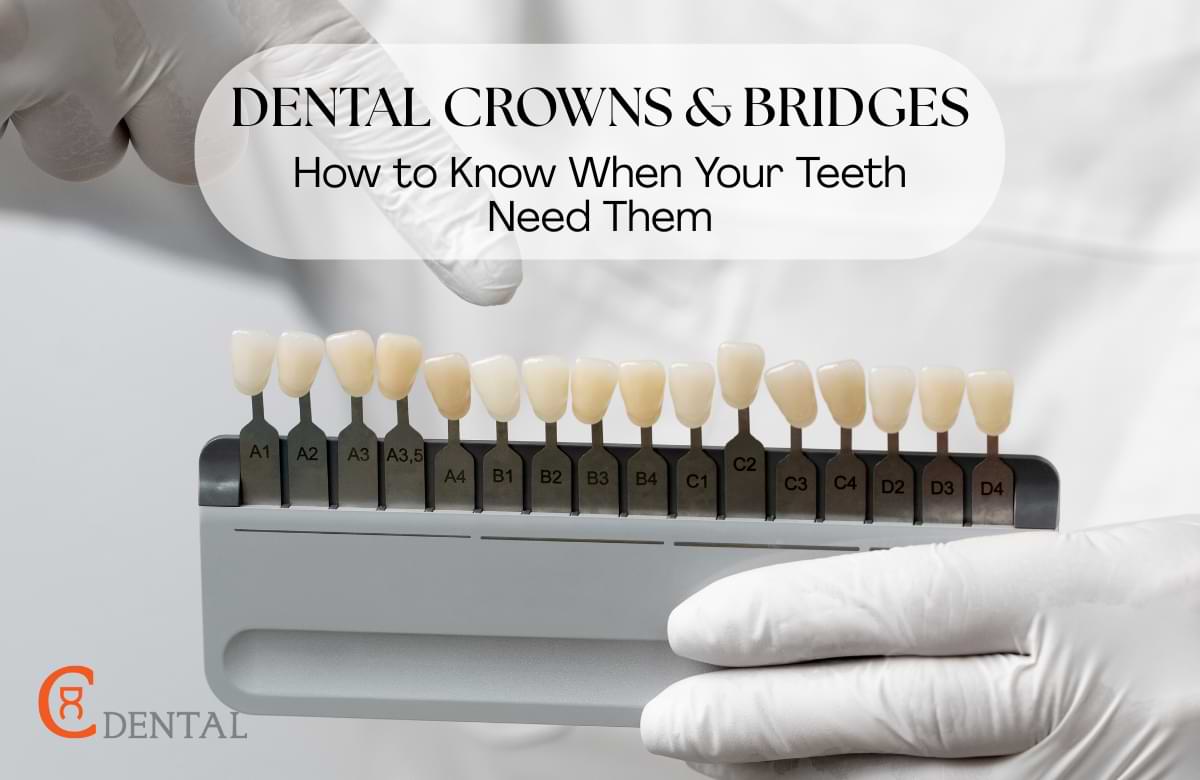
Dental health goes beyond brushing and flossing—it’s about maintaining function, aesthetics, and long-term oral stability. If you’ve ever faced a cracked tooth, a large cavity, or a missing tooth, you may have heard about dental crowns and bridges. But how do you know which option is right for you? How do you decide when your teeth actually need them?
At C-Dental Clinic in Sharjah, we focus on guiding patients through these decisions, blending expertise, advanced technology, and patient-friendly care. This comprehensive guide explores the purpose, procedure, benefits, and care of dental crowns and bridges, helping you make informed choices without unnecessary medical jargon.
What Are Dental Crowns?
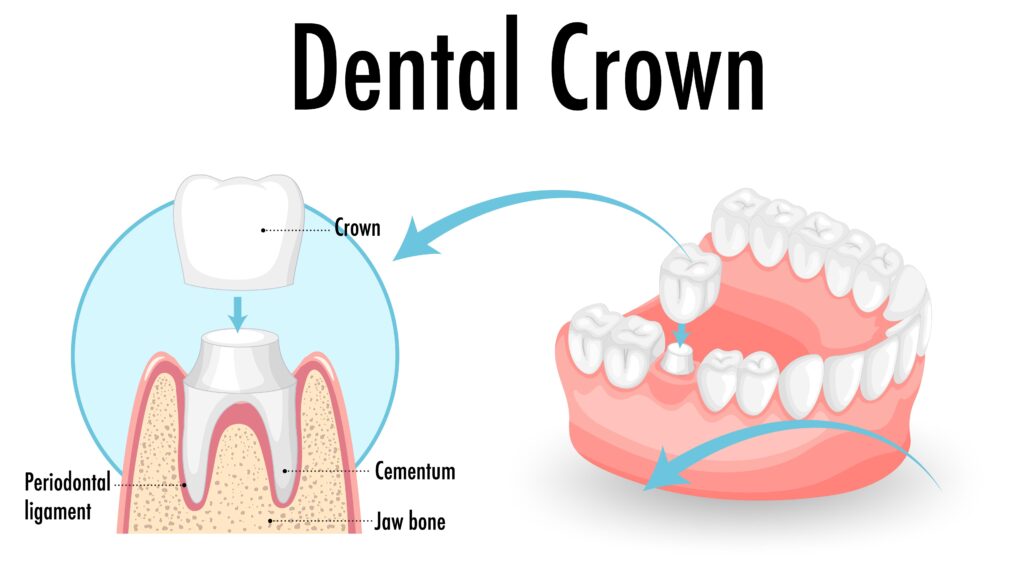
A dental crown is more than just a protective cap—it is a custom-made restoration designed to strengthen, restore, and improve the appearance of a damaged tooth. Crowns are ideal for teeth that are weakened by decay, fractured, or structurally compromised. They also serve as a durable option following root canal treatment, which can leave teeth fragile and vulnerable to breaking.
The beauty of crowns lies in their versatility. Modern crowns can restore chewing ability, support speech, and improve aesthetics all at once. At C-Dental Clinic, our dentists evaluate each tooth carefully, considering factors like bite alignment, surrounding teeth, and overall oral health. The crown material—whether porcelain for a natural look, zirconia for strength, or porcelain-fused-to-metal for a balance of both—is selected to maximize durability, appearance, and comfort.
Why crowns matter:
- Protect damaged teeth from further harm
- Restore normal chewing and biting function
- Enhance appearance and confidence
- Support long-term oral health when combined with proper hygiene
What Are Dental Bridges?
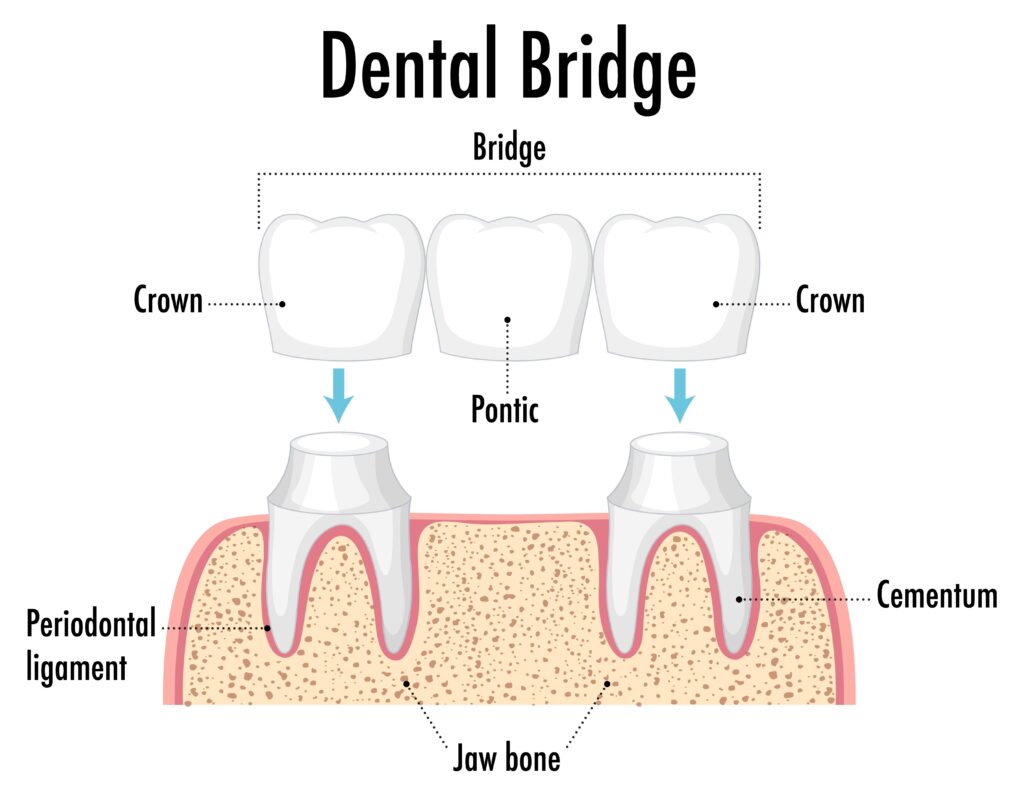
A dental bridge is a solution for missing teeth. Unlike crowns, which protect a single tooth, a bridge fills the gap left by one or more missing teeth, maintaining your smile’s structure and function. Bridges typically use adjacent teeth or dental implants as support, with artificial teeth (pontics) bridging the space.
People often need a bridge to:
- Prevent neighboring teeth from shifting
- Restore chewing efficiency and speech
- Preserve facial structure and aesthetics
- Replace missing teeth for a natural-looking smile
There are several types of bridges:
- Traditional Bridge: Supported by crowns on adjacent teeth
- Cantilever Bridge: Anchored on one side
- Maryland Bridge: Bonded framework to adjacent teeth
- Implant-Supported Bridge: Secured on implants for long-lasting stability
Bridges are particularly valuable when missing teeth affect function, confidence, or oral health, as they maintain alignment and prevent bite complications over time.
Crowns vs. Bridges: Understanding the Differences
Understanding the difference helps you make informed choices:
| Feature | Dental Crown | Dental Bridge |
| Purpose | Protects a damaged tooth | Replaces missing teeth |
| Support | Single tooth | Adjacent teeth or implants |
| Restores a smile across gaps | 1–2 appointments | Multiple teeth, more complex fit |
| Longevity | 10–15 years with care | 10+ years, may require adjustments |
| Cosmetic Impact | Covers single tooth | Covers a single tooth |
Choosing between a crown and a bridge depends on your specific oral health needs, tooth location, and lifestyle.
When Might You Need a Crown or Bridge?
Crowns Are Recommended When:
- Teeth are weakened by decay or fracture
- After root canal therapy
- Large fillings leave a tooth structurally compromised
- For cosmetic enhancements such as discoloration, shape correction, or alignment
Bridges Are Recommended When:
- You have missing teeth
- Gaps affect chewing, speech, or bite alignment
- Cosmetic concerns due to front teeth missing
- You want to maintain facial structure and prevent teeth from shifting
Recognizing these signs early allows you to consult your dentist before the surrounding teeth are affected, reducing complications and maintaining oral health.
The Procedure: What to Expect
Dental Crown Procedure
A crown procedure usually involves:
- Initial Assessment: Dentist examines the tooth, may take X-rays, and discusses material options.
- Tooth Preparation: Damaged or decayed portions are removed, and the tooth is shaped to hold the crown.
- Impression & Temporary Crown: A temporary crown protects the tooth while the permanent one is fabricated.
- Fitting the Permanent Crown: Adjustments are made to ensure comfort, bite alignment, and appearance.
- Final Check: Dentists verify functionality, appearance, and patient comfort.
Patient perspective: Many patients describe the process as comfortable and transformative, with restored teeth that look natural and feel strong.
Dental Bridge Procedure
- Consultation & Planning: Dentist evaluates the gap, supporting teeth, and bone structure.
- Preparation: Adjacent teeth may be shaped to hold crowns.
- Impressions: Taken for precise bridge fabrication.
- Temporary Bridge: Protects your mouth while the permanent bridge is created.
- Permanent Bridge Placement: Fitted and adjusted for comfort, function, and aesthetics.
- Follow-Up Care: Ensures long-term fit and oral hygiene maintenance.
Caring for Crowns and Bridges
Restorations can last many years with proper care.
Daily Care:
- Brush twice daily
- Floss carefully around crowns and bridges
- Use interdental brushes for hard-to-reach areas
Food & Lifestyle Considerations:
- Avoid sticky, hard, or extremely sugary foods
- Don’t chew ice or use teeth as tools
- Consider night guards if you grind your teeth
- Ensure crowns and bridges remain secure and healthy
- Professional cleaning prevents plaque buildup and gum disease
Why C-Dental Clinic?
Routine Checkups:
At C-Dental Clinic, we combine expertise, advanced technology, and patient care to provide lasting dental solutions:
- Experienced dentists: Dr. Farheen & Dr. Bin Shidha
- Over 5,000 patients treated with 10+ years of experience
- High-tech restorations ensuring comfort, precision, and aesthetics
- Personalized advice and preventive care strategies
- Focus on ethical, compassionate dental care
Our goal is to help patients choose the right restorative option, maintain oral health, and enjoy confident smiles.
FAQs
A: With proper care, 10–15 years or longer. Longevity depends on hygiene and lifestyle.
A: Local anesthesia ensures comfort. Minor sensitivity may occur afterward.
A: Permanent restorations cannot be whitened; careful color selection is important.
A: Yes. Once fitted, you can chew normally, though avoid very hard foods initially.
A: Coverage varies; our clinic can help you understand your plan options.
Conclusion
Dental crowns and bridges are durable, aesthetic, and functional solutions for damaged or missing teeth. With expert guidance from C-Dental Clinic, patients can restore oral function, protect their smile, and maintain long-term dental health.
Book your consultation today to explore customized solutions for crowns and bridges and experience the confidence of a healthy, beautiful smile.
References
1) What Are Dental Crowns And Tooth Bridges? – Colgate
2) Dental Bridges– Cleveland Clinic
3) Dental Crowns And Bridges in Dentistry – NDA Dental Clinic
4) Dental Crowns and Bridges – Renfro Family Dental





Leave a Reply