
Introduction
Imagine sipping an ice-cold drink or biting into hot soup, and suddenly your teeth scream in discomfort. You rush to the dentist, expecting a cavity, but the X-rays come back clean. Confusing, isn’t it?
If you’re struggling with a sensitive tooth but no cavity, you’re not alone. Millions experience this common dental issue, and it can be caused by a variety of factors, some temporary, some requiring professional attention.
In this comprehensive guide, we’ll cover:
- Why your teeth feel sensitive even without cavities
- Causes and triggers of tooth sensitivity
- Practical home remedies and preventive tips
- When to see a dentist in Sharjah
By the end, you’ll know exactly how to protect your teeth, reduce discomfort, and maintain a healthy smile.
Understanding Tooth Sensitivity
Tooth sensitivity occurs when the protective layers of your teeth’s enamel and dentin are compromised. This exposes the nerves inside your teeth, causing pain when triggered by:
- Cold or hot food and drinks
- Sweet or acidic foods
- Brushing or flossing
Symptoms of Sensitive Teeth
- Sharp, brief pain while eating or drinking
- Tingling along the gum line
- Discomfort when brushing or flossing
- Sensitivity that comes and goes
Important: Tooth sensitivity does not always indicate a cavity. Studies from the American Dental Association (ADA) confirm that enamel erosion, gum recession, and cracks can all trigger pain without decay.
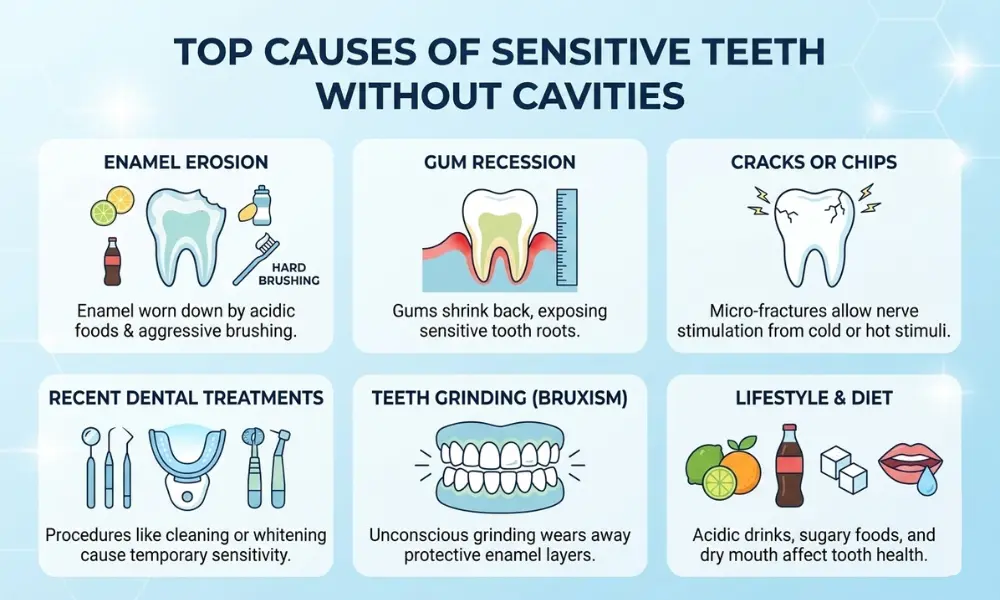
Top Causes of Sensitive Teeth Without Cavities
Feeling a sudden zing in a tooth, but your dentist says there’s no cavity? You’re not alone. Sensitive teeth without cavities are surprisingly common. In many cases, the discomfort occurs because the protective layers of the tooth weaken, exposing dentin or irritating the tooth’s nerve endings. Identifying the root cause can help you manage tooth sensitivity before it becomes a persistent problem.
1. Enamel Erosion from Everyday Habits
Enamel is the protective outer layer of your teeth. When it gradually wears away, the dentin underneath becomes exposed. This dentin contains microscopic channels connected to nerves, which makes teeth react quickly to hot, cold, or sweet foods. Acidic drinks like soda & cold drinks can accelerate enamel erosion over time.
2. Gum Recession Exposing Tooth Roots
Gum recession can reveal the roots of your teeth. Unlike the visible crown of the tooth, these roots are not covered with enamel, making them more vulnerable to temperature changes and pressure. Aging, gum disease, or brushing too hard are common factors that lead to receding gums & increased tooth sensitivity.
3. Tiny Cracks or Micro-Fractures
Even small cracks in a tooth can trigger sensitivity. These micro-fractures may develop from chewing hard foods, accidental trauma, or long-term stress on teeth.
4. Teeth Grinding (Bruxism)
Grinding or clenching your teeth, especially during sleep, gradually wears down enamel. Over time, this exposes the inner layers of the tooth and increases sensitivity when eating or drinking.
5. Diet and Lifestyle Triggers
Frequent consumption of acidic foods, sugary snacks, or carbonated drinks can weaken enamel and worsen sensitivity. Conditions such as dry mouth or acid reflux may also contribute to enamel erosion.
Home Remedies & Preventive Tips
You can manage sensitive teeth but no cavity at home using these tips:
Daily Oral Care
- Use soft-bristled toothbrushes
- Brush gently for 2 minutes, twice a day
- Floss carefully to avoid gum damage
Desensitizing Toothpaste
- Contains compounds that block pain signals to nerves
- Use consistently for 2–4 weeks for noticeable improvement
Avoid Acidic Foods Temporarily
- Citrus fruits, soda, vinegar-based foods
- Rinse your mouth with water after consumption
Mouthguards for Grinding
- Protects enamel from nightly grinding
- Reduces root exposure and sensitivity
Fluoride Treatments
- Strengthens enamel and reduces sensitivity
- Available as gels, rinses, or professional applications
Quick Tip: Avoid whitening treatments while experiencing sensitivity.
When to See a Dentist?
Persistent sensitivity, even without a cavity, may require professional care. Visit CDental Sharjah if you notice:
- Pain lasting more than a few days
- Sharp pain triggered by cold, hot, or sweet foods
- Swelling, bleeding, or pus near the gums
- No improvement despite home care
A professional dentist can:
- Examine enamel and gum health
- Identify micro-fractures or early decay
- Recommend treatments like fluoride varnish, bonding, or protective sealants
Misconceptions About Tooth Sensitivity vs Cavities
| Symptom | Sensitive Teeth | Cavity / Tooth Decay |
| Pain Trigger | Cold, hot, sweet, acidic | Constant, localized |
| Visible Damage | Usually none | Visible pit or discoloration |
| Duration | Short, brief pain | Persistent if untreated |
| Cause | Enamel loss, gum recession, and cracks | Bacterial decay |
| Treatment | Desensitizing toothpaste, diet, and dentist care | Filling, restoration, or root canal |
Fact: Experiencing sensitivity does not automatically mean you have a cavity. Early detection of underlying causes is key.
Frequently Asked Questions
A: No. Sensitivity often occurs due to enamel erosion, gum recession, or cracks. A cavity is only one possible cause.
A: Yes, minor sensitivity often responds to desensitizing toothpaste and proper oral care. Persistent sensitivity should be checked.
A: Not necessarily. Treatments like fluoride varnish, proper brushing, and lifestyle changes can reduce sensitivity.
A: Yes, in moderation. Rinse with water afterward and avoid frequent acidic foods.
A: Maintain good oral hygiene, avoid aggressive brushing, and visit C Dental Clinic for regular checkups.
Conclusion
Sensitive teeth without a cavity are more common than many people think. You may feel a quick, sharp pain when drinking cold water, eating sweets, or enjoying hot foods. While this discomfort can be worrying, it does not always mean tooth decay. In many cases, sensitivity occurs when enamel becomes thinner, gums recede, or the inner dentin layer becomes exposed.
You can reduce tooth sensitivity by improving daily habits. Brush gently with a soft toothbrush to protect enamel. Use toothpaste designed for sensitive teeth to calm nerve reactions. Limiting acidic drinks like soda and citrus juices can also help prevent further enamel damage. Paying attention to when sensitivity occurs can help you identify triggers and avoid them.
If the pain becomes frequent or starts interfering with meals, visit a dentist for a proper checkup. Early care can prevent bigger problems. At C Dental Sharjah, our team helps identify the cause of sensitivity and provides solutions to keep your smile healthy and comfortable.

References
- How To Differentiate Between Cavity Pain & Tooth Sensitivity– Overlake Dental
- Do I have a cavity or sensitive teeth?– Sensodyne
- Is It a Cavity or Just Sensitivity? Signs You Should See a Family Dentist–Royal Vista Dental
- Does Tooth Sensitivity Mean A Cavity is Present?– Windy City Family Dental
Please subscribe to our social channels for updates related to dental care and oral health.
Instagram: cdental2025
Facebook: CDental
YouTube: C-Dental Clinic


Leave a Reply