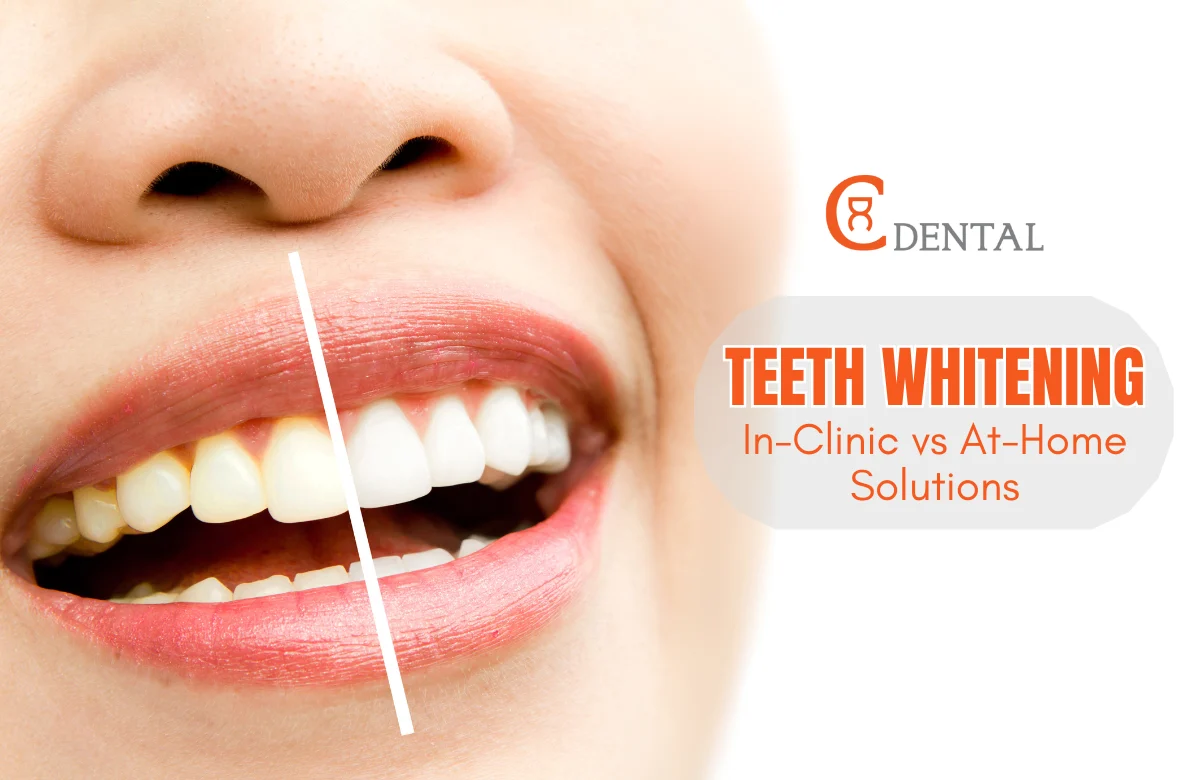
Your smile is one of the first things people notice. Over time, teeth can develop stains or yellowing that affect confidence. Teeth whitening has become a popular solution—but with so many options, how do you know what works best? In this guide, we break down in-clinic versus at-home teeth whitening, their pros, cons, and what you can realistically expect.
Why Teeth Whitening Matters for Everyday Confidence
A bright, white smile doesn’t just look good—it can influence how others perceive you and how you feel about yourself. While good oral hygiene keeps your teeth healthy, cosmetic discoloration is common, caused by coffee, tea, smoking, or natural enamel changes. Choosing the right whitening method ensures you achieve a confident smile without compromising enamel or comfort.
What Causes Teeth to Look Yellow in the First Place?
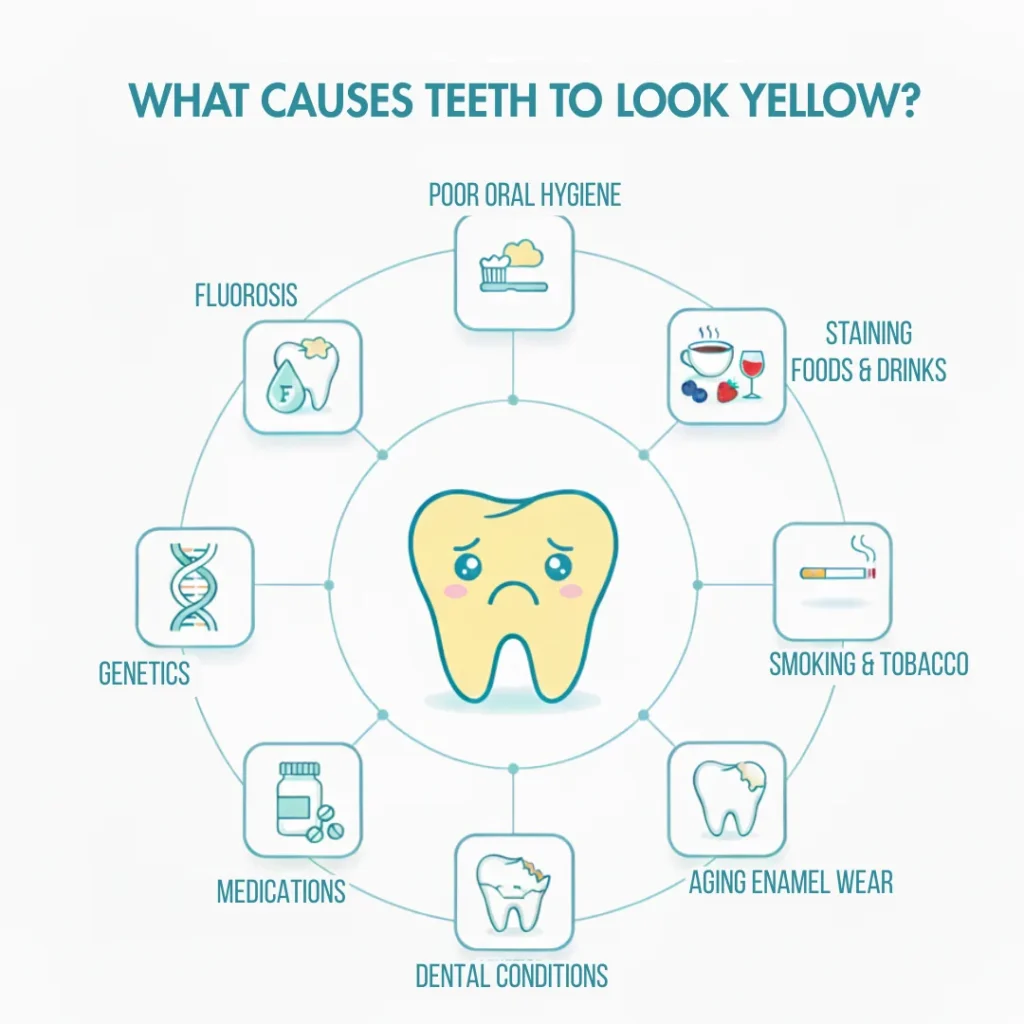
Understanding the cause of discoloration helps choose the most effective whitening method:
- Extrinsic stains: Surface stains from coffee, tea, red wine, tobacco, or certain foods.
- Intrinsic stains: Deeper discoloration due to natural dentin color or minor enamel thinning.
- Aging: Natural enamel wear exposes underlying dentin, making teeth appear darker.
- Dental treatments: Fillings or crowns can sometimes discolor over time.
In-Clinic Teeth Whitening: How It Works
In-clinic whitening is performed by dental professionals and uses stronger bleaching agents under controlled conditions.
How It Works
- High-concentration whitening gels are safely applied to teeth.
- Optional light or laser activation to accelerate results.
- Protective barriers shield gums and soft tissue.
- Dentist supervision ensures safe application.
Pros of In-Clinic Whitening
- Fast, visible results after a single session.
- Effective for deeper stains.
- Even whitening across all teeth.
- Minimal risk when applied professionally.
Cons of In-Clinic Whitening
- Higher cost compared to at-home kits.
- Requires a visit to the dental clinic.
- Results are not permanent and need periodic maintenance.
Typical Whitening Cost
Costs vary depending on treatment type and clinic location. In-clinic whitening is generally considered an investment in safety, speed, and predictability.
At-Home Teeth Whitening: How It Works
At-home whitening kits are widely available and convenient, but effectiveness depends on proper use.
Common Types
- Whitening strips
- Whitening pens or gels
- LED whitening kits
- Custom trays provided by dentists
Pros of At-Home Whitening
- Budget-friendly option for mild stains.
- Convenient and flexible for home use.
- Useful for maintaining results after in-clinic treatment.
Cons of At-Home Whitening
- Slower results, usually several weeks.
- Uneven whitening may occur if applied incorrectly.
- Risk of sensitivity or gum irritation if overused.
In-Clinic vs At-Home Whitening: A Clear Comparison
| Factor | In-Clinic Whitening | At-Home Whitening |
| Speed | Fast (1–2 sessions) | Gradual (2–4 weeks) |
| Strength | High-concentration gels | Low–moderate concentration |
| Safety | Dentist supervise | User-controlled |
| Results | Even, predictable | Variable, may be patchy |
| Cost | Higher | Lower |
| Maintenance | Touch-ups recommended | Repeated application required |
Safety Considerations: Protecting Your Enamel & Smile
Whitening is cosmetic, not a dental necessity. Safety is key:
- Avoid overusing high-concentration gels.
- Monitor sensitivity during and after whitening.
- Follow the dentist’s guidance to prevent enamel damage.
- Avoid whitening if you have active cavities or gum disease.
Choosing the Right Whitening Approach
Choose In-Clinic Whitening If You:
- Want fast, noticeable results.
- Have deeper stains that at-home kits cannot address.
- Prefer professional supervision for safety and predictable outcomes.
Choose At-Home Whitening If You:
- Have mild surface stains.
- Want a cost-effective, gradual whitening process.
- Are disciplined with consistent use.
Maintaining Whitening Results Long-Term
To extend the effects of whitening:
- Limit consumption of staining beverages such as coffee, tea, or red wine.
- Brush twice daily and maintain good oral hygiene.
- Consider touch-up kits for gradual fading.
- Schedule regular cleanings with your dentist to maintain optimal results.
Common Myths About Teeth Whitening
- Whitening permanently damages enamel (False with professional guidance).
- At-home kits are equally effective as professional treatments (Partially false; results vary).
- Whitening is a one-time solution (False; maintenance is required).
- All teeth respond the same way (False; intrinsic stains may need professional treatment).
Why Patients Prefer Professional Whitening at C-Dental
At C-Dental, we focus on safe, effective, and comfortable cosmetic treatments:
- Experienced cosmetic dentists supervise every procedure.
- Shade assessment ensures realistic results.
- Sensitivity management protocols reduce discomfort.
- Modern whitening systems provide safe, predictable results.
- Honest guidance sets clear expectations before treatment.
Frequently Asked Questions: Teeth Whitening
Q1: Is professional teeth whitening safe?
Yes, when applied by a trained dentist with proper protective measures.
Q2: How long do whitening results last?
Results vary depending on lifestyle and maintenance; touch-ups may be needed periodically.
Q3: Do whitening strips really work?
They are effective for mild surface stains but may not remove deep discoloration.
Q4: Why do teeth become sensitive after whitening?
Sensitivity is temporary and usually due to peroxide concentration; professional care minimizes risk.
Q5: Which method gives faster results?
In-clinic whitening provides faster and more predictable results than at-home kits.
Conclusion: Choose the Whitening Method That Suits Your Needs
Both in-clinic and at-home teeth whitening methods can enhance the brightness of your smile. The best option depends on your goals, type of discoloration, sensitivity level, budget, and the pace at which you want to see results.
At-home kits can be helpful for mild staining and gradual change, while in-clinic whitening offers quicker, more controlled results—especially for deeper or persistent discoloration.
If you’re considering whitening and want guidance on what’s best for your teeth, a professional assessment can help you make an informed decision.
Interested in Teeth Whitening?
You’re welcome to book a consultation at C-Dental to understand which method suits you best.
During your visit, our team will help with:
- Assessing your tooth shade and sensitivity
- Recommending suitable whitening options
- Ensuring a comfortable, safe experience
👉 Book your consultation today
References
- Teeth Whitening: More Effective at Home or in the Clinic?– Dentevim Dental Clinic
- Teeth Whitening Options: In-Clinic vs. At-Home – Which is Right for You?-Ministry Of Smile
- In-Clinic vs At-Home Teeth Whitening: Which Is Better?-Dental Niddrie Plaza
- Why Choose Professional Teeth Whitening Over Home Treatments?-The Team Dental
- Teeth Whitening Treatment: In-Clinic vs At-Home Kits—What’s Safer and More Effective?– Sure Smile Dental Care
Please subscribe to our social channels for updates related to dental care and oral health.
Instagram: cdental2025
Facebook: CDental
YouTube: C-Dental Clinic

Leave a Reply