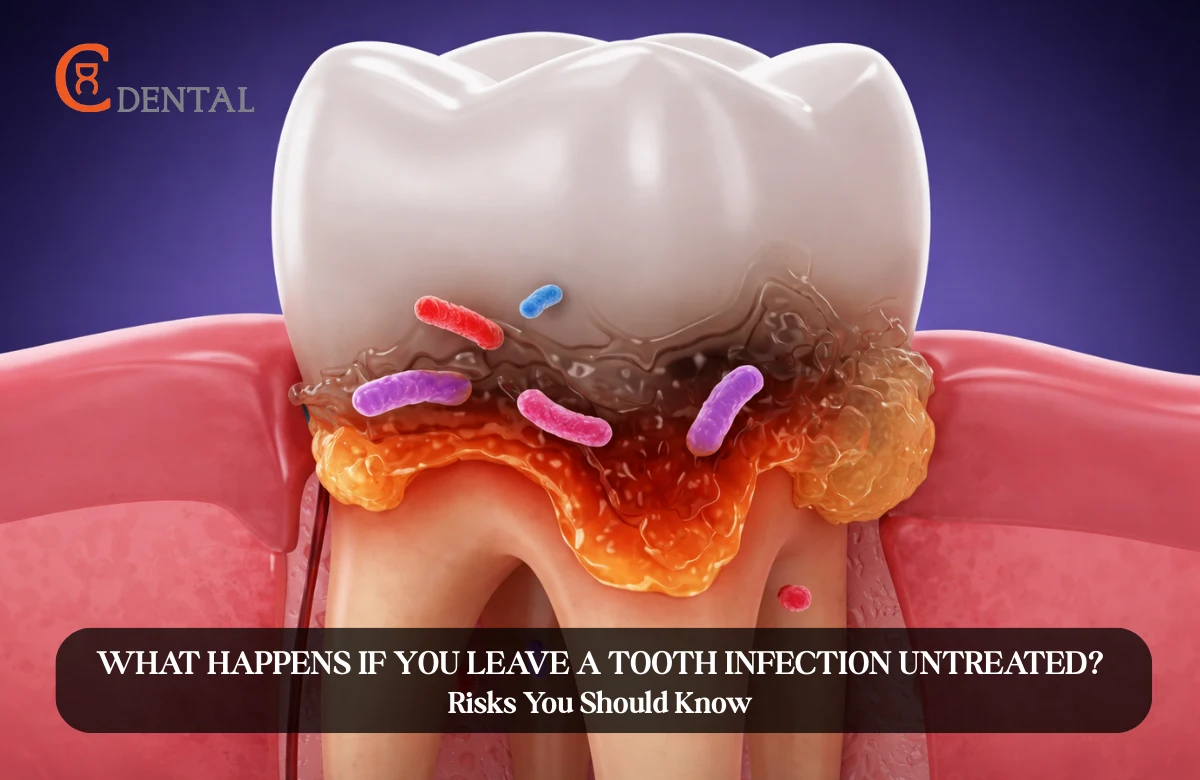
Most people brush off a mild toothache, thinking it’s nothing serious. You might tell yourself it will go away on its own or that a little pain is normal. But dental infections are not something to ignore. A small cavity or gum problem can quickly become a severe tooth infection, spreading pain and complications beyond your mouth. In some cases, an untreated infection can even become life-threatening. Understanding the risks, symptoms, and treatment options is essential for anyone who values their health and quality of life.
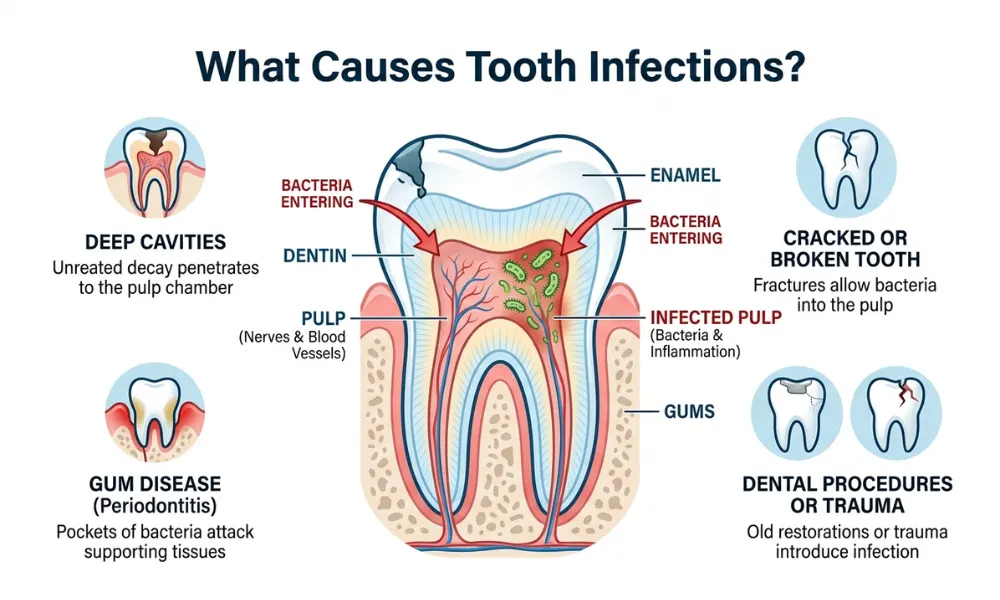
What Causes Tooth Infections?
A tooth infection begins when bacteria penetrate the inner layers of a tooth, reaching the pulp. This often happens because of cavities, cracked teeth, gum disease, or previous dental work. Even minor damage can create a pathway for bacteria to multiply. Poor oral hygiene, sugary diets, and neglecting dental care accelerate this process.
Common causes include:
- Deep cavities that reach the tooth’s pulp
- Cracked or broken teeth that allow bacteria inside
- Gum disease creates pockets for bacterial growth
- Previous dental procedures or trauma to the tooth
Bacteria thrive in these conditions, creating a chain reaction that can quickly turn a small dental problem into a serious infection.
Recognizing the Early Signs
Catching a tooth infection early is crucial. The first signs are often subtle but can escalate if ignored.
Watch for:
- Persistent toothache, especially throbbing or dull pain
- Sensitivity to hot or cold foods and drinks
- Swelling in the gums, jaw, or face
- Bad taste or odor in the mouth
- Tender or swollen lymph nodes near the jaw
Even minor discomfort should not be ignored. Many people delay treatment, thinking the pain will subside, but early intervention prevents more serious problems.
Short-Term Consequences of Ignoring a Tooth Infection
Ignoring a tooth infection for days or weeks can cause serious discomfort and dental complications. Pain may intensify, making it difficult to eat, talk, or sleep. Pus-filled abscesses can form around the tooth, and the infection may spread to neighboring teeth or the jawbone. Over time, untreated infections can damage the structure of your teeth and gums, requiring more complex and costly treatment.

Serious Health Risks of Untreated Tooth Infections
Potential for Sepsis
What starts as a toothache can spiral into sepsis, a life-threatening infection in your bloodstream. It’s rare, but the risk is real.
Cardiac and Brain Complications
Studies show that oral infections can increase the risk of heart problems. In extreme cases, bacteria may even reach the brain, causing infections there.
Long-Term Immune System Impact
Your immune system works overtime when battling an infection, leaving you more vulnerable to other illnesses.
Chronic dental infections may also worsen conditions like diabetes or heart disease. Delaying treatment puts your overall health at risk.
Don’t Ignore a Toothache: How Small Pain Can Turn Serious
Even a mild toothache can become a major problem if left untreated. Pain may slowly increase, swelling can appear in the gums or jaw, and it may become difficult to eat or sleep. Delaying a dental visit allows the infection to spread to nearby teeth or soft tissues, turning a small issue into something more serious.
This scenario shows how quickly a minor dental concern can escalate, emphasizing why early attention is always the safest choice.
Treatment Options
The good news is that most tooth infections are treatable when addressed early.
- Root Canal Therapy: Removes the infected tissue while preserving the tooth
- Tooth Extraction: Necessary when the tooth is beyond repair, preventing the infection from spreading
- Antibiotics: Help control the spread of bacteria but do not replace dental treatment
Prompt treatment relieves pain, prevents complications, and ensures better long-term dental health. Delaying care increases the likelihood of tooth loss and systemic health risks.
Prevention: Protecting Your Smile and Health
Preventing a tooth infection is easier than treating one. Daily habits and regular dental care are key:
- Brush twice daily and floss to remove bacteria and plaque
- Use mouthwash for added protection against germs
- Limit sugary foods and drinks that contribute to cavities
- Schedule regular dental checkups to catch problems early
- Teach children proper oral hygiene habits to prevent infections
Good oral hygiene not only protects teeth but also prevents pain, stress, and costly dental procedures later.
Emotional and Lifestyle Impact
Dental infections affect more than your oral health. Pain and discomfort can disrupt sleep, work, and social life. Chronic toothache can cause irritability, stress, and anxiety. Children may miss school, and adults may struggle to focus at work. Addressing a tooth infection promptly preserves both physical health and emotional well-being.
When to Seek Emergency Dental Care?
Certain signs indicate that you should seek urgent dental attention:
- Trouble breathing or swallowing
- High fever or rapid heartbeat
- Severe swelling of the face or jaw
- Rapidly growing abscess
- Intense, unrelenting pain
Prompt care can prevent life-threatening complications and reduce the need for extensive treatments later.
Frequently Asked Questions
A: A tooth infection should never be left untreated. While symptoms may seem mild at first, the infection can worsen within days or weeks. Over time, bacteria can spread to surrounding tissues, the jawbone, or even other parts of the body. Seeking dental treatment early helps prevent serious complications.
A: No, a tooth infection will not heal on its own. The infection usually continues to progress unless the infected tissue is removed through dental treatment such as a root canal or tooth extraction. Pain may temporarily decrease if the nerve dies, but the infection can still remain and spread.
A: Signs that a tooth infection may be worsening include severe or throbbing tooth pain, swelling in the face or jaw, fever, difficulty swallowing, sensitivity to hot or cold foods, and a persistent bad taste in the mouth. If these symptoms occur, you should seek dental care as soon as possible.
A: Antibiotics can help control the spread of bacteria, but they usually do not eliminate the source of the infection inside the tooth. Dental procedures such as a root canal treatment or extraction are typically required to fully remove the infected tissue and resolve the problem.
A: Emergency dental care is needed if you experience severe facial swelling, difficulty breathing or swallowing, high fever, or intense, persistent pain. These symptoms may indicate that the infection is spreading and requires immediate medical attention.
Conclusion
A tooth infection may start small, but its consequences can be severe if ignored. Early detection, timely treatment, and good oral hygiene are the keys to preventing pain and protecting overall health. Whether through a root canal, extraction, or preventive care, acting early ensures better outcomes and keeps your teeth and body safe. Do not wait for the pain to become unbearable. Take care of your teeth now to maintain your smile, health, and quality of life.
👉 Book your dental consultation today and protect your smile before the problem worsens.

References
- What Happens If You Don’t Remove an Infected Tooth?– Doc Rok
- What Happens If Your Tooth Root Infection Is Left Untreated?– Fine Arts Dentistry
- How Long Can a Tooth Infection Go Untreated?– Arch Dental
- The Silent Danger of Untreated Dental Infections–My Local Dentists West Ryde
Please subscribe to our social channels for updates related to dental care and oral health.
Instagram: cdental2025
Facebook: CDental
YouTube: C-Dental Clinic





Leave a Reply