
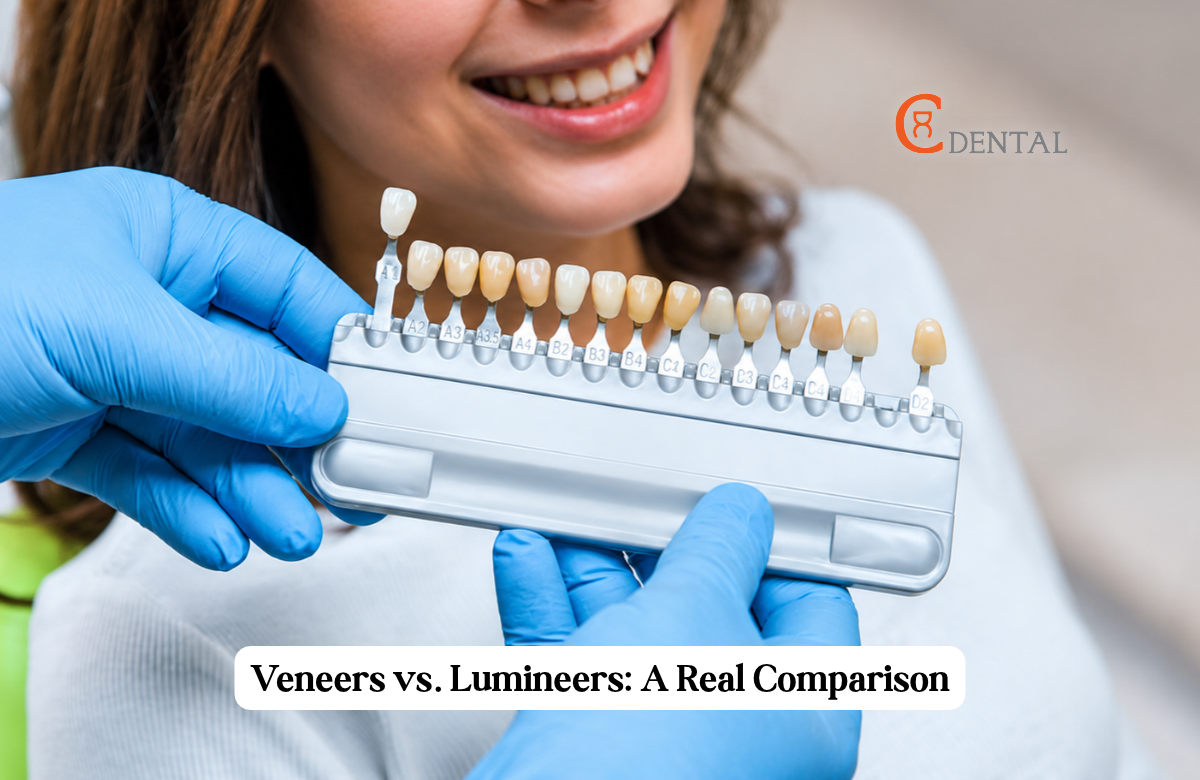

Both promise the same thing: a brighter, more even smile, fast. But “veneers” and “Lumineers” get used almost interchangeably online, which makes choosing between them harder than it should be. They’re related, not identical, and the real difference comes down to a few practical factors that actually affect how they look, how long they last, and what happens to your natural teeth along the way.
What Each One Actually Is
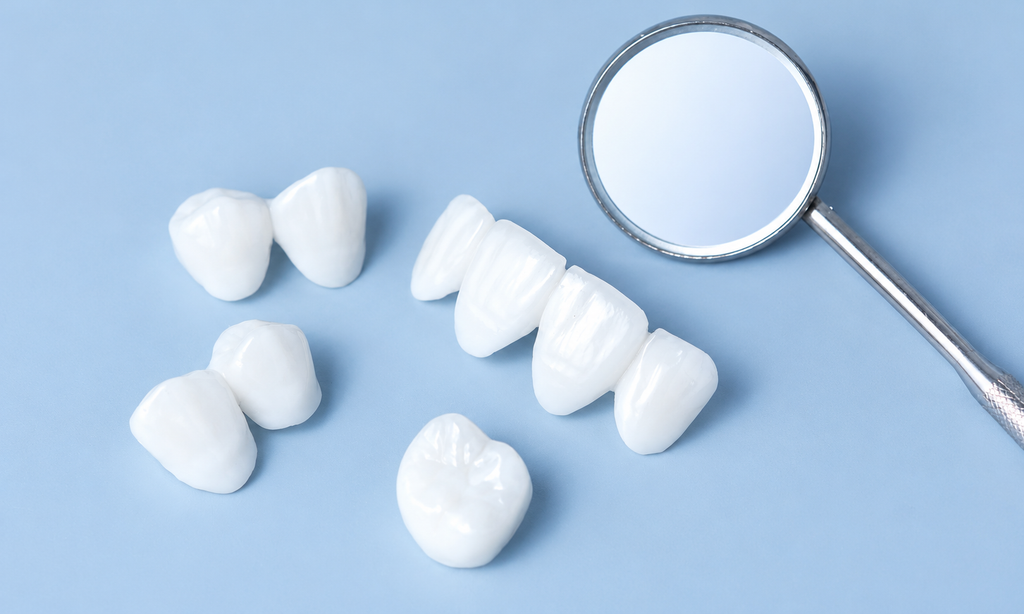
Porcelain veneers are thin custom shells, roughly 0.5 to 0.7 millimeters thick, bonded to the front of your teeth to cover chips, stains, gaps, or uneven shapes. To make room for that thickness and create a flush, natural-looking fit, your dentist removes a small amount of enamel before bonding them in place.
Lumineers are a specific, patented brand of ultra-thin porcelain veneer, made from a material called Cerinate. At roughly 0.2 to 0.3 millimeters, they’re noticeably thinner, often compared to the thickness of a contact lens. That thinness is the whole point: Lumineers usually need little to no enamel removal at all, which is why they’re often called “no-prep veneers.”
In short, Lumineers are a type of veneer, not a completely separate category. The difference that matters comes down to thickness, and everything else follows from that.
The Four Differences That Actually Matter
1. How much of your tooth gets prepared Traditional veneers require light enamel reduction to fit properly and sit flush against your tooth. Lumineers, because they’re so much thinner, usually skip this step entirely. That makes Lumineers a more conservative option if keeping your natural enamel intact matters to you, and in many cases the process is reversible, since there’s less permanent tooth alteration involved.
2. How natural they look on discolored teeth This is where thickness works against Lumineers a little. Their thinness makes them slightly translucent, which is great for a subtle look but means they’re not always the strongest option for covering significant discoloration or a noticeably dark tooth underneath. Traditional veneers, being thicker and more opaque, generally do a better job fully masking heavier staining or damage.
3. How long they last Both options hold up well with proper care, but traditional veneers generally edge ahead on pure durability, typically lasting 10 to 15 years or more, compared to roughly 8 to 12 years for Lumineers. The gap isn’t huge, but if you grind your teeth or want the longest possible lifespan from the investment, thicker, traditional veneers tend to hold up better under that kind of pressure.
4. What it costs Lumineers are often slightly less expensive upfront, mainly because the procedure involves less prep work and chair time. That said, the price ranges for both genuinely overlap quite a bit depending on the case, and the “cheaper” option today can even out over time if it needs replacing sooner than a traditional veneer would. Cost shouldn’t be the only factor in the decision.
Which One Actually Fits You?
A few rough guidelines, though your dentist will always confirm this properly based on an in-person exam:
- If you have minor to moderate discoloration, small gaps, or slightly uneven teeth, and you’d prefer to keep as much natural enamel as possible, Lumineers are often a strong fit.
- If you’re dealing with more significant staining, chips, or want maximum durability and coverage, traditional porcelain veneers usually deliver a more reliable, longer-lasting result.
- If you grind your teeth at night, thicker, traditional veneers generally hold up better against that repeated pressure than the thinner Lumineers option.
- If reversibility matters to you, meaning you’d like the option to remove them later without permanently altering your teeth, Lumineers’ no-prep approach keeps that door open in a way traditional veneers don’t.
Neither option is objectively “better” across the board. The right choice depends on what your teeth actually need and what you personally value, natural enamel preservation, maximum durability, or the lightest possible touch.
What Both Options Have in Common
It’s worth remembering how much overlap exists too. Both are custom-made from porcelain, both are color-matched to blend naturally with your smile, both require a proper consultation and impression process before placement, and both need the same basic care afterward, good oral hygiene, avoiding using your teeth as tools, and regular checkups to keep an eye on their condition over the years.
Frequently Asked Questions
Q: Can I switch from Lumineers to traditional veneers later if I change my mind?
A: Often, yes, since Lumineers require minimal to no enamel removal, there’s usually more natural tooth structure left to work with if you want to upgrade to traditional veneers down the line.
Q: Do Lumineers feel different in my mouth?
A: Most people describe them as feeling very close to natural teeth, sometimes even less noticeable than traditional veneers at first, since there’s less change to the tooth’s original shape and thickness underneath.
Q: Which option is more painful to get?
A: Neither should cause significant pain. Traditional veneers may involve a small amount of local anesthetic for the enamel-reduction step, while Lumineers, requiring little to no reduction, are often placed with little to no anesthesia needed at all.
Q: Can either option fix crooked teeth?
A: Both can visually improve mild misalignment by adjusting the shape and angle of the visible tooth surface, but neither actually moves teeth. Significant crowding or bite issues usually need orthodontic treatment first.
Q: How do I know which one is right for my specific teeth?
A: This really does need an in-person exam. Your dentist checks your enamel condition, the extent of discoloration, your bite, and your goals before recommending one over the other, rather than a generic rule applying to everyone.
Veneers and Lumineers at C Dental Clinic

At C Dental Clinic in Al Nahda, Sharjah, choosing between porcelain veneers and Lumineers starts with a proper look at your teeth, not a one-size-fits-all recommendation. We’ll walk you through exactly what each option means for your specific case, so the decision actually fits your smile and your priorities.
👉 Book a consultation at C Dental Clinic to find out which option is right for you.
References
- Cleveland Clinic — Veneers: Types, Procedure, and Care
- American Academy of Cosmetic Dentistry — Veneers and Lumineers Explained
- Colgate Oral Care — Lumineers vs. Veneers: What’s the Difference



Leave a Reply