

Most people hear “gum reshaping” and think of cosmetic work, like fixing a gummy smile. Sometimes that’s exactly right. But dentists and periodontists also use gingivectomy to solve real health problems: gums that have grown over the teeth, pockets that trap plaque, and tissue that blocks other treatment.
Here is what a gingivectomy involves, when it’s medically necessary, and what to expect before and after.
What Is a Gingivectomy?
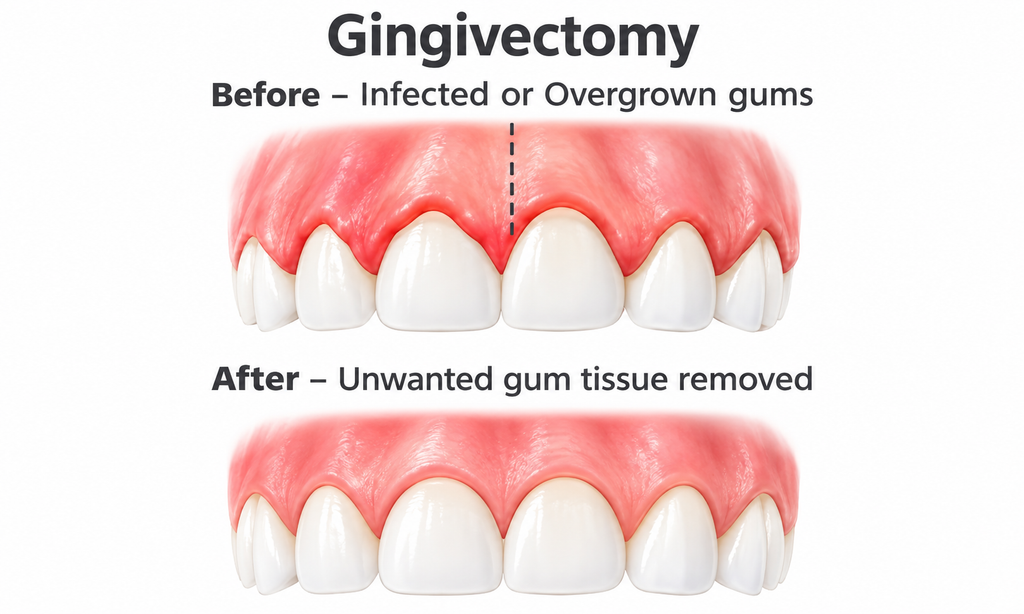
A gingivectomy is a minor surgery that removes excess or diseased gum tissue. A related procedure, gingivoplasty, reshapes the gum line without necessarily removing much tissue. Dentists often do both in the same visit, so you may hear the terms used together.
| Gingivectomy | Gingivoplasty | |
| What it does | Removes excess or diseased gum tissue | Reshapes and contours the gum line |
| Typical goal | Treat overgrowth or certain pockets | Create a smooth, even gum line |
| How often | Often paired with gingivoplasty | Often paired with gingivectomy |
When Is a Gingivectomy Medically Necessary?
Three situations come up most often.
1. Gum overgrowth (gingival enlargement) Gum tissue can thicken and grow over the teeth. Common causes include:
- Certain medications, such as some seizure drugs, immunosuppressants, and calcium channel blockers for blood pressure
- Long-term inflammation from plaque
- Braces, which make cleaning harder
- Hormonal changes
- A rare inherited condition called hereditary gingival fibromatosis
Overgrown gums trap plaque, and the inflammation then makes the overgrowth worse. A gingivectomy removes the extra tissue so you can clean your teeth properly again.
2. Gum pockets that sit above the bone In gum disease, pockets form between the tooth and the gum. If the pocket comes from thick gum tissue and the bone is still at a normal level, removing the excess tissue shrinks the pocket and makes it easy to clean. Dentists usually try deep cleaning (scaling and root planing) first. A periodontics assessment can help determine whether further gum treatment or surgery is needed.
3. Gums that block treatment or daily function Excess tissue can cover enough of a tooth to stop a dentist from placing a filling or crown. It can also get in the way of chewing and cleaning.
When It’s Cosmetic (and Often Both)
Many people choose a gingivectomy for a gummy smile or an uneven gum line. If excess gum tissue is responsible for a gummy smile, gum smile correction may be an appropriate treatment option.
Removing a little gum exposes more of the tooth and balances the smile. Many cases mix both reasons: the gums look uneven and they’re hard to keep clean.
The cause matters. Excess gum tissue responds well to gingivectomy. A gummy smile that comes from short teeth, the lip, or the jaw needs a different approach, and your dentist will check which one you have.
When a Gingivectomy Isn’t the Right Fix
- Deep pockets with bone loss. These usually need deep cleaning, laser therapy, or regenerative or flap surgery instead of gum removal.
- Receding gums. That’s the opposite problem. Dentists treat it with gum grafting, not removal.
- Active gum infection. Your dentist treats the infection first.
- Overgrowth from medication. Never stop or change a prescribed medicine on your own. Ask your doctor whether an alternative exists, and let your dentist and doctor coordinate.
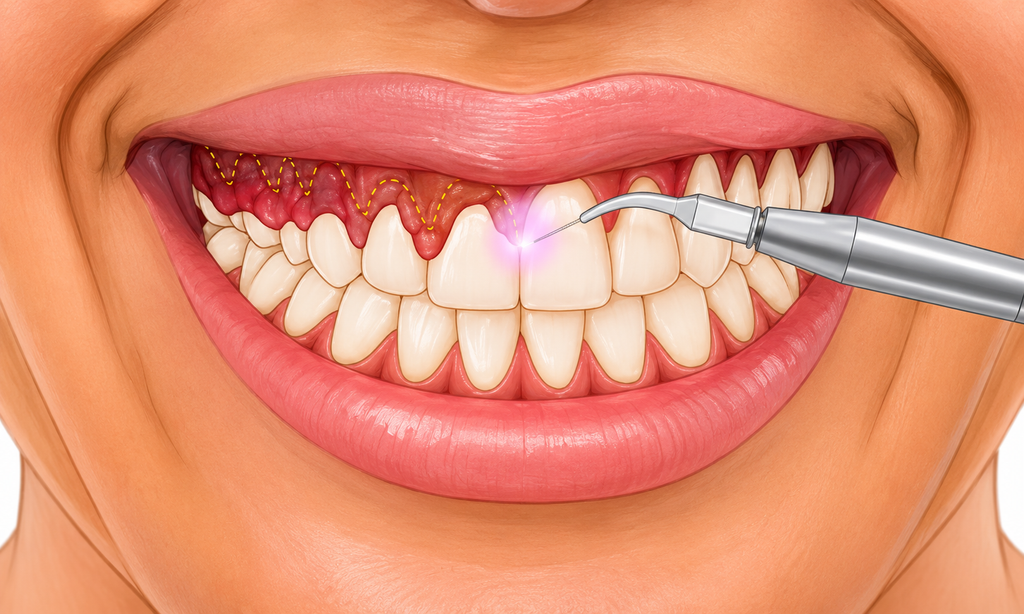
What the Procedure Involves
- Exam and planning. Your dentist checks your gums, measures pocket depth, and takes X-rays to see the bone. You may need a deep cleaning first.
- Numbing. A local anesthetic keeps you comfortable.
- Removing the tissue. Your dentist uses a scalpel, a laser, or an electrosurgical tool to remove the excess gum.
- Reshaping. Your dentist smooths the remaining gum into an even, natural contour.
- Protection. In some cases, your dentist covers the area with a protective dressing.
Scalpel or Laser?
Both methods work. The scalpel is the traditional approach. A laser, commonly used in laser dentistry, seals the gum tissue as it cuts, so you may experience less bleeding and may not need stitches.
Recovery and Aftercare
Most people heal in about a week, and some need up to two weeks. Mild soreness and tenderness are normal. To help the gums heal:
- Eat soft, cool foods for the first few days and avoid spicy, crunchy, or acidic food
- Brush the rest of your mouth as usual and go gently around the treated area
- Rinse with warm salt water or the mouthwash your dentist recommends
- Avoid smoking, which slows healing
- Take the pain relief your dentist suggests
- Go to your follow-up visit
Call your dentist if bleeding doesn’t stop, pain gets worse after the first few days, or you notice fever, swelling, or pus.
Risks to Know About
Any surgery carries some risk, but gingivectomy is considered safe. Possible effects include bleeding, infection, and sensitivity to hot or cold when root surfaces are exposed. Your teeth may also look longer afterward. Healthy gum tissue doesn’t grow back, so your dentist plans conservatively and removes only what you need.
Will the Gums Grow Back?
Usually not. Results are generally permanent when the dentist diagnoses the cause correctly. The exception is overgrowth that medication, inflammation, or heredity caused. That can return, so brushing, flossing, regular check-ups, and a review of any medicines help keep it away.
Frequently Asked Questions
Q: Is a gingivectomy painful? A: Your dentist numbs the area first, so you shouldn’t feel pain during the procedure. Your gums may feel sore for a few days afterward, and soft foods and the pain relief your dentist suggests help.
Q: What’s the difference between a gingivectomy and crown lengthening? A: A gingivectomy removes gum tissue only. Crown lengthening can also reshape the bone around a tooth to expose more of it, often before a dentist places a crown.
Q: Can I have a gingivectomy for a gummy smile? A: Yes, if excess gum tissue causes the gummy smile. If short teeth, the lip, or the jaw cause it, your dentist will suggest a different option.
Q: How long until I can return to normal activities? A: It depends on how much tissue your dentist removes. Ask at your consultation, and follow your dentist’s advice for eating and brushing.
Q: How much does it cost? A: The price depends on how many teeth need treatment and which method your dentist uses. After examining your gums, your dentist gives you a clear quote.

Gingivectomy at C Dental Clinic
At C Dental Clinic in Al Nahda, Sharjah, we offer gingivectomy as part of our laser dentistry services. We start by finding out why your gums look or feel the way they do. If gum disease is behind it, our periodontics team treats it first. If you mainly want to correct a gummy smile, you can also read about our gum smile correction treatment.
👉 Book a consultation at C Dental Clinic to find out whether a gingivectomy is right for you.
References
- Cleveland Clinic — Gingivectomy: Procedure & Recovery
- National Center for Biotechnology Information — Conventional Gingivectomy Procedure in the Management of Orthodontic-Induced Gingival Overgrowth: A Case Report
Leave a Reply