
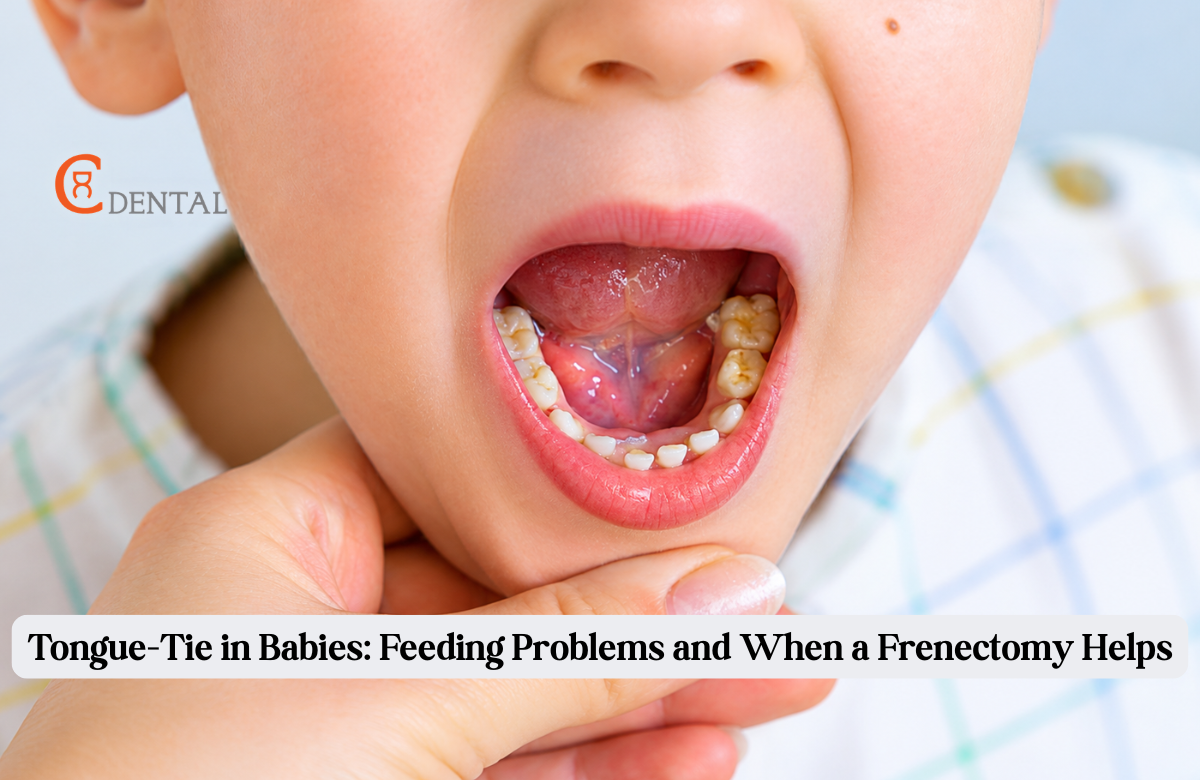

Painful latching, a baby who seems hungry constantly but never quite satisfied, feeding sessions that drag on far longer than they should. These are exhausting on their own, and when a pediatrician or lactation consultant mentions “tongue-tie” as a possible cause, it’s natural to want clear answers fast: what is this, does my baby actually have it, and does it need fixing?
Here’s what tongue-tie actually involves, how it connects to feeding difficulties, and when a frenectomy genuinely helps.
What Tongue-Tie Actually Is
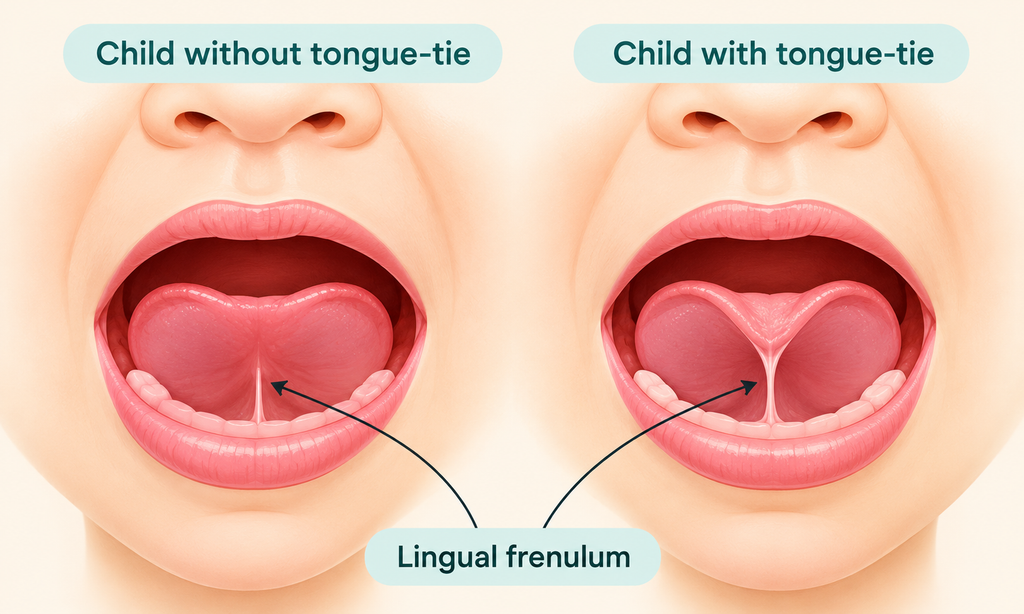
Tongue-tie, medically called ankyloglossia, happens when the thin band of tissue connecting the tongue to the floor of the mouth, the lingual frenulum, is shorter or tighter than usual. That restriction limits how freely the tongue can move, which matters more than it sounds, since a baby needs full tongue mobility to latch onto a nipple and create the suction needed to feed effectively.
Tongue-tie affects somewhere around 3 to 11% of newborns, depending on the study, and it’s more common in boys and firstborn children. A related condition, lip-tie, involves a tight frenulum connecting the upper lip to the gum instead, and the two sometimes occur together.
Here’s an important point worth knowing upfront: many babies with tongue-tie have no symptoms at all. Having a short frenulum doesn’t automatically mean feeding problems follow. This matters because it shapes how a diagnosis gets approached, it’s not a condition that’s treated just because it’s present, but because it’s actually causing a problem.
Signs Your Baby Might Have Tongue-Tie
A few signs, in the baby and in the breastfeeding parent, tend to point toward tongue-tie as worth investigating:
In your baby:
- Difficulty staying latched, or popping on and off the nipple repeatedly during feeds
- A tongue that looks notched or heart-shaped when your baby cries or sticks it out
- Trouble lifting the tongue to the roof of the mouth, or moving it side to side
- Unusually long feeding sessions without seeming satisfied afterward
- Clicking sounds while feeding
- Slow weight gain, in more significant cases
In a breastfeeding parent:
- Pain while nursing, beyond the normal adjustment period
- Cracked, damaged, or misshapen nipples after feeds
- A feeling that the baby is chewing rather than properly latching
Not every baby with tongue-tie shows all of these, and some of these signs can come from other causes entirely, like a shallow latch unrelated to the tongue at all. That’s exactly why a proper evaluation matters more than trying to diagnose it from a symptom checklist at home.
How Tongue-Tie Gets Diagnosed
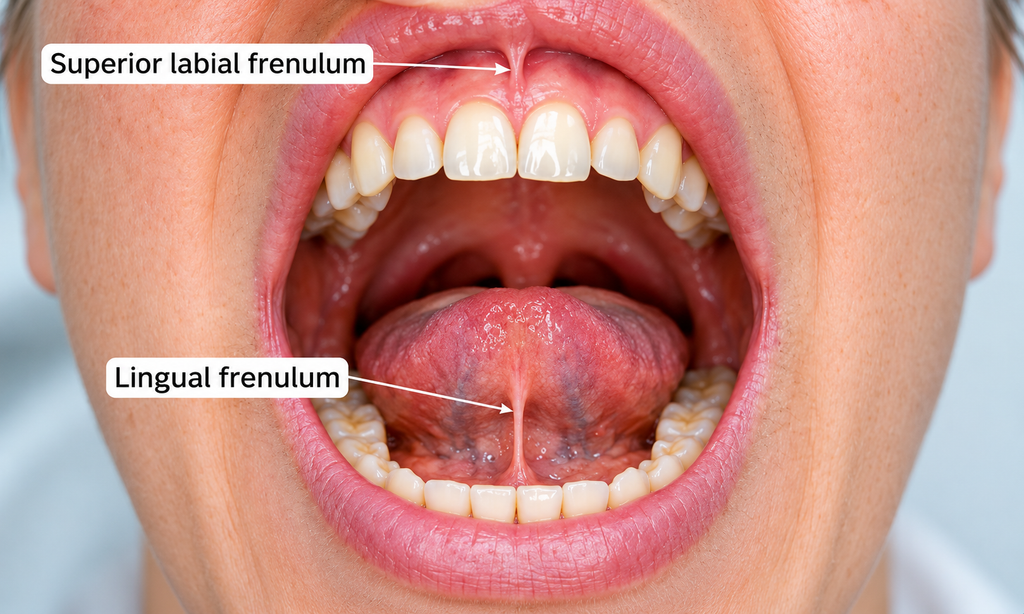
A pediatrician, lactation consultant, or dentist examines your baby’s mouth directly, checking how far the tongue extends, how it moves, and the appearance of the frenulum itself. Often, this evaluation happens alongside a broader look at the whole feeding relationship, since latch problems can come from several directions at once, not tongue-tie alone.
This combined approach matters. The research on tongue-tie is genuinely mixed, some studies show clear improvement in feeding after treatment, while others find no strong evidence that frenectomy alone extends breastfeeding duration. That’s not a reason to dismiss the diagnosis, it’s a reason a thorough evaluation, rather than treatment based on appearance alone, leads to better decisions.
What a Frenectomy Actually Involves
A frenectomy (sometimes called a frenotomy) releases the tight frenulum, giving the tongue, or lip, more room to move freely. For infants, it’s typically a quick, simple procedure:
- A dentist or specialist examines the frenulum and confirms it’s contributing to the feeding difficulty
- Using sterile scissors or a laser, the frenulum is released in a procedure that usually takes just a few minutes
- Minimal to no anesthesia is generally needed for infants, given how brief the procedure is
- Breastfeeding often resumes within minutes afterward, which also helps soothe your baby
Laser frenectomy has become increasingly common for this age group, since it tends to involve less bleeding and a smoother recovery compared to traditional scissors.
What Happens After
Most families notice some improvement in latch and feeding comfort fairly quickly, though it isn’t always instant, and tongue function sometimes needs a bit of practice to catch up with the new range of motion. Gentle stretching exercises are sometimes recommended afterward to prevent the area from reattaching as it heals, your dentist will walk you through exactly what that looks like if it applies to your baby.
Complications are rare, but it’s still a minor procedure worth having done by someone experienced specifically with infant frenectomies, given how small and delicate the area is at that age.
Does Every Tongue-Tie Need Treatment?
Not necessarily. Since many babies with a tight frenulum feed just fine, a “wait and see” approach is sometimes reasonable, particularly for mild cases without clear feeding difficulty. The decision to treat comes down to whether tongue-tie is actually causing a functional problem, not simply whether it’s present.
This is worth discussing directly with your pediatrician, lactation consultant, and dentist together, since feeding difficulties sometimes resolve with latch coaching and positioning changes alone, without needing a procedure at all.
Frequently Asked Questions
Q: Is a frenectomy painful for my baby? A: The procedure itself is brief, and infants typically have very few nerve endings in this specific tissue. Most babies cry briefly from being held still rather than from pain, and settle quickly once feeding resumes.
Q: Will tongue-tie fix itself as my baby grows? A: It doesn’t typically resolve on its own, since the frenulum doesn’t change shape with growth. Some babies simply adapt well enough that it never causes a noticeable problem, which is different from it going away.
Q: What if my baby is older, is it too late for a frenectomy? A: No. Frenectomies are performed at various ages, including in older children when tongue-tie affects speech, eating, or dental alignment rather than feeding specifically.
Q: Can lip-tie cause feeding problems too? A: Yes, on its own or alongside tongue-tie. An upper lip-tie can affect how well a baby seals around the nipple, and some babies benefit from treating both together if both are contributing to feeding difficulty.
Q: Should I see a lactation consultant or a dentist first? A: Either is a reasonable starting point, and many families end up working with both. A lactation consultant can help assess the overall feeding relationship, while a dentist evaluates and treats the frenulum itself if a procedure is needed.

Infant Frenectomy at C Dental Clinic
At C Dental Clinic in Al Nahda, Sharjah, every infant frenectomy evaluation looks at the full feeding picture, not just the appearance of the frenulum, so you get a clear answer on whether treatment will actually help your baby before anything is done.
Our pediatric dentistry team also provides children’s dental care and helps parents understand oral health concerns at different stages of childhood.
👉 Book a consultation at C Dental Clinic if you’re concerned about tongue-tie or feeding difficulties.



Leave a Reply