
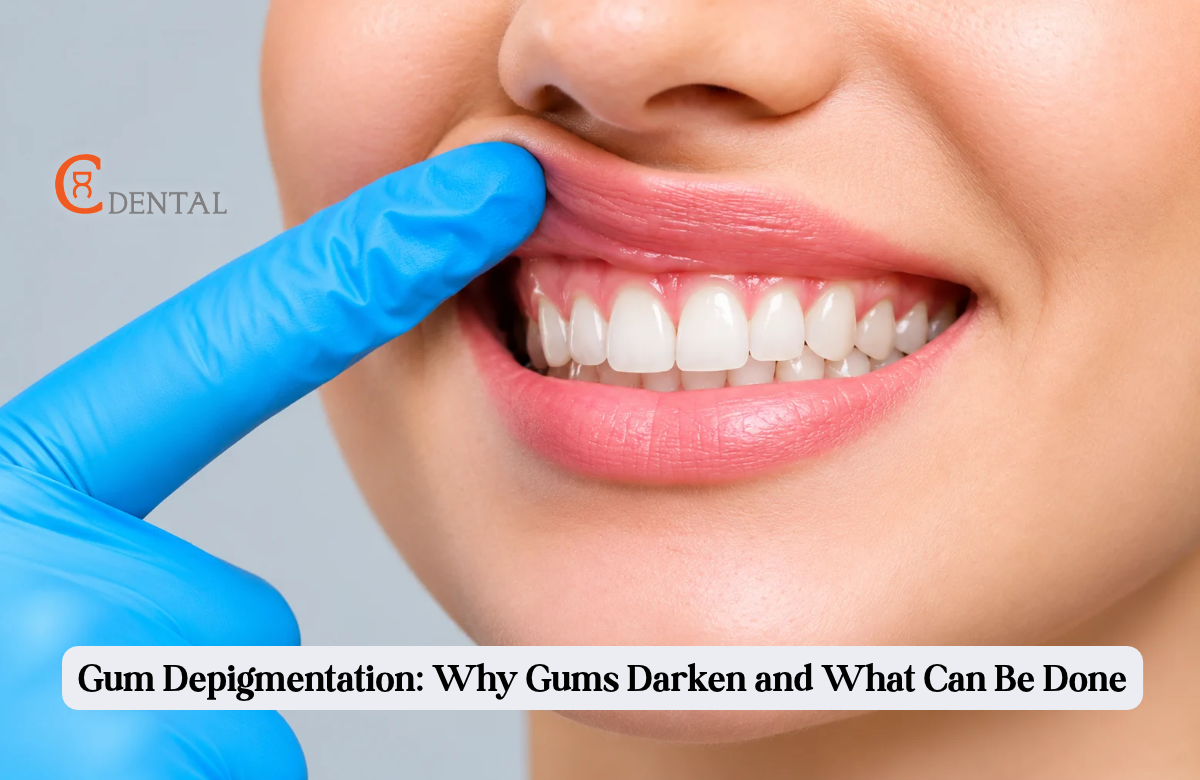

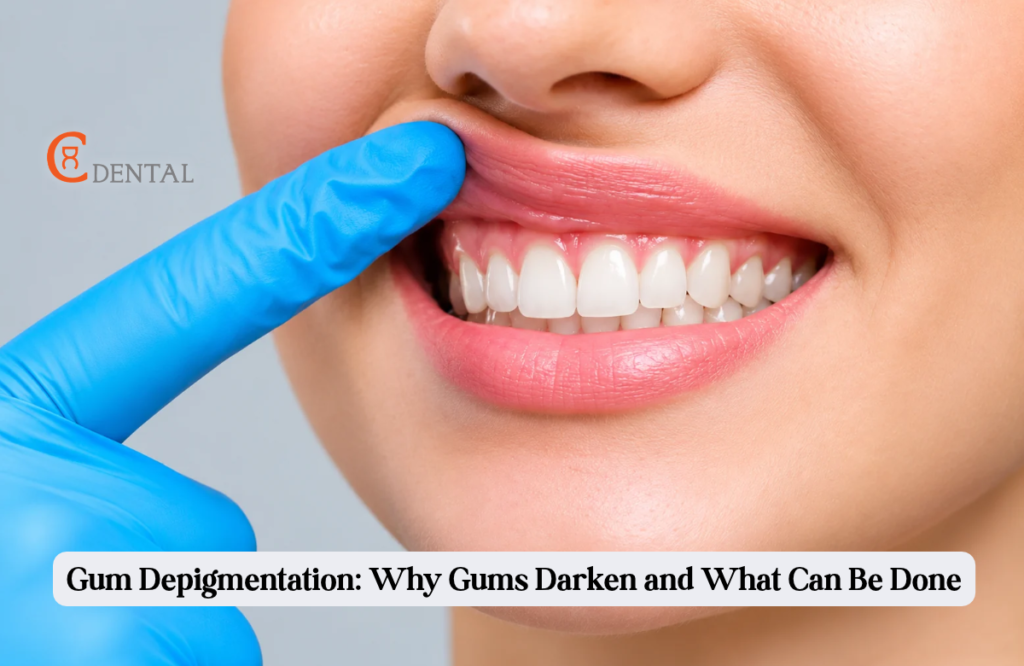
Plenty of people like their smile until they spot it in a photo and notice dark gums. Some start smiling with their lips closed. Others worry something is wrong with their health. The truth is simpler than most people expect: dark gums are usually harmless, and when they bother you, a quick treatment called gum depigmentation can lighten them.
Here is what causes dark gums, when they need a dentist’s attention, and how treatment works.
Why Some Gums Are Naturally Dark
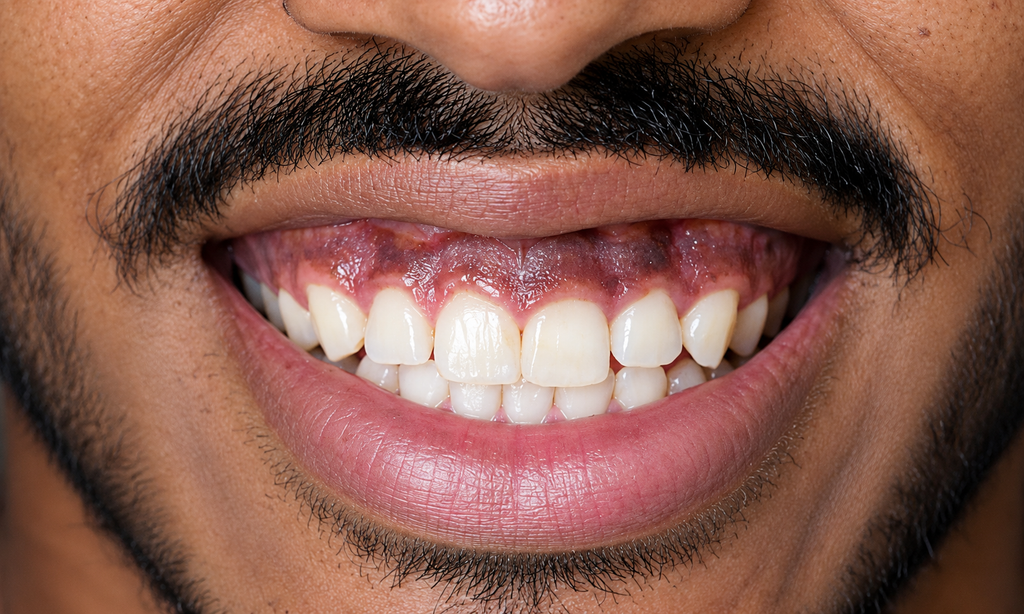
Gum tissue contains melanin, the same pigment that gives skin, hair, and eyes their color. Your genes decide how much your gums make. People with more melanin tend to have gums that look medium brown, dark brown, or even black, usually in an even pattern. This is common in people with deeper skin tones, but it can happen with any skin tone.
If your gums have always looked this way, feel firm, and don’t hurt or bleed, they are healthy. Dentists call this natural darkening gingival hyperpigmentation.
What Else Can Darken Gums
Melanin is the most common cause, but it isn’t the only one:
- Smoking. Tobacco stimulates melanin production and can create brown or black patches. Dentists call this smoker’s melanosis.
- Medications. Some drugs, including certain ones for acne, malaria, and other conditions, can change gum color.
- Amalgam tattoos. Tiny particles from old silver fillings can settle in the gum and leave a small gray or black spot.
- Gum disease. Inflamed gums often look red or purple and bleed easily. In advanced disease, dark tartar under the gumline can make the area look darker.
- Health conditions. Some hormone-related conditions, such as Addison’s disease, can darken gums.
- Oral melanoma. This is rare, but it explains why a new dark spot deserves a check.
When Dark Gums Need a Dentist’s Check
Color alone doesn’t signal disease. A change does. See your dentist soon if you notice:
- A new dark spot that appears suddenly
- A patch that grows, changes shape, or has uneven edges
- A dark area that bleeds, hurts, or forms a sore that doesn’t heal within two weeks
- A dark patch on the roof of your mouth
- Red, swollen gums that bleed when you brush
- Darkening that started after a new medication or after you began smoking
Most dark spots turn out to be harmless, but your dentist should confirm that, especially before any cosmetic treatment.
What Is Gum Depigmentation?
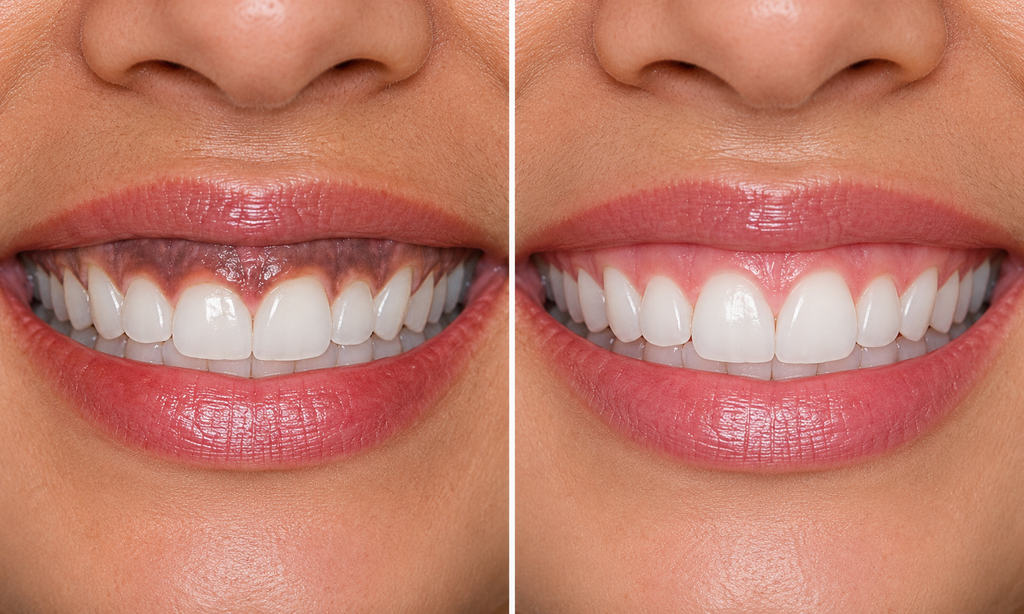
Gum depigmentation, also called gum bleaching or gum lightening, is a minor procedure that removes the dark surface layer of gum tissue. As the gums heal, lighter pink tissue replaces it.
The procedure is cosmetic, so nobody needs it for health reasons. People choose it when dark gums make them self-conscious, especially when they show a lot of gum as they smile or laugh. It isn’t the same as teeth whitening, and it doesn’t change your tooth color.
Treatment Options
| Method | How it works | What to know |
| Laser | A dental laser removes a thin layer of pigmented gum | Little bleeding, often no stitches, usually quick recovery |
| Scalpel | The dentist cuts away the pigmented layer | Effective, but usually more bleeding and a longer, more uncomfortable healing |
| Diamond bur | A rotating tool wears away the surface layer | Needs a skilled hand |
| Other methods | Chemical agents, cryosurgery, electrosurgery | Dentists use these less often today |
| Gum graft | Paler tissue from elsewhere in the mouth replaces the dark gum | More involved, so dentists save it for specific cases |
Many dentists prefer laser because it causes little bleeding and often less discomfort afterward than a scalpel. Your dentist recommends a method based on how much gum you want treated and how healthy your gums are.
What Laser Gum Depigmentation Involves
- Gum check and plan. Your dentist examines your gums, treats any gum disease first, and confirms the dark color is simple pigmentation.
- Numbing. A local anesthetic keeps you comfortable.
- Laser treatment. Your dentist passes the laser over the dark areas and removes a thin layer of gum tissue.
- Finish. Treatment usually takes less than an hour, depending on how much gum you treat, and you go home the same day.
Recovery and Aftercare
Gums usually heal in about one to two weeks as new pink tissue forms. Mild tenderness and sensitivity are normal, and most people return to their routine within a day or two. To help healing:
- Eat soft, cool foods for the first few days and avoid spicy, acidic, or very hot food
- Brush gently with a soft toothbrush and keep the area clean
- Avoid smoking, which slows healing and can bring the dark color back
- Take any pain relief your dentist recommends
- Go to your follow-up visit
Your dentist will give you instructions that fit your treatment.
Will the Dark Color Come Back?
Sometimes. Pigment cells can return, and some patients see the dark color come back within months. Smoking and a strong genetic tendency raise the odds. Other people keep their results for years. No dentist can promise it lasts forever, but quitting smoking and caring for your gums helps. If color returns, your dentist can often repeat the treatment.
Who Is a Good Candidate?
You’re likely a good candidate if your gums are healthy, the dark color bothers you, and you understand that results vary. Active gum disease needs treatment first. A new or changing dark spot needs a check before anything else. Smokers can still have the procedure, but their results may not last as long.
Myths About Lightening Dark Gums
Whitening toothpaste, “gum whitening” creams, and home scrubbing don’t remove gum pigment. They can irritate or wear down your gums. Treatment from a dentist is the reliable way to lighten gum pigment.
Frequently Asked Questions
Q: Is gum depigmentation painful?
A: Your dentist numbs the area first, so you shouldn’t feel pain during treatment. Your gums may feel sore or sensitive for a few days afterward. Soft foods and the pain relief your dentist suggests help.
Q: How long do the results last?
A: It varies. Some people keep their results for years, while others see the color return within months, especially if they smoke.
Q: Is it safe?
A: Dentists use lasers for gum treatments routinely, and the procedure is considered safe when a trained dentist performs it after checking your gums.
Q: Can I have it if I smoke?
A: Yes, but smoking can slow healing and bring the dark color back. Quitting improves your results.
Q: How much does it cost?
A: The price depends on how much gum you treat and which method your dentist uses. After examining your gums, your dentist gives you a clear quote.
Gum Depigmentation at C Dental Clinic
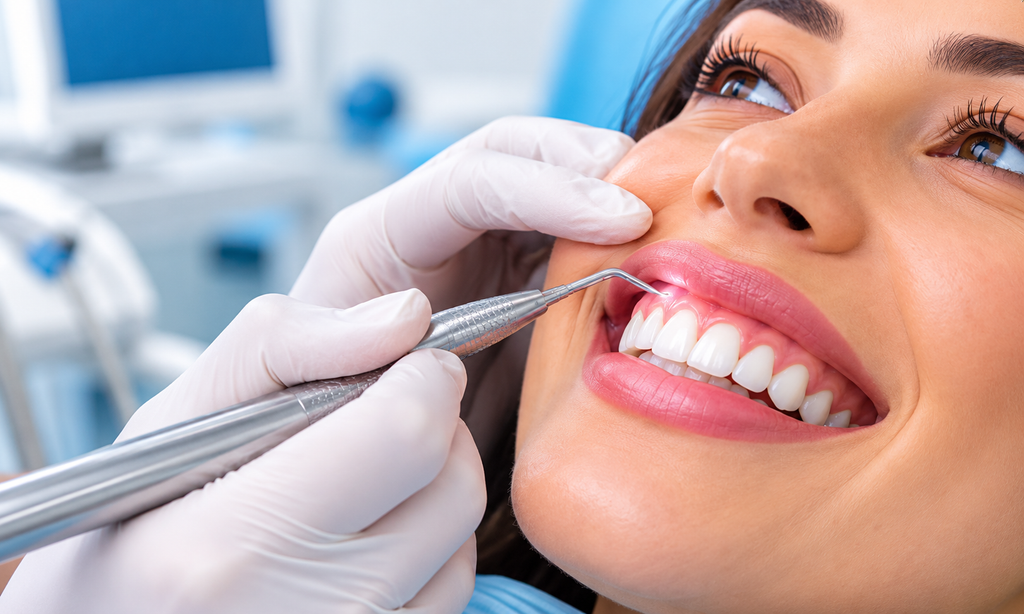
At C Dental Clinic in Al Nahda, Sharjah, we offer gum depigmentation, also called laser gum bleaching, as part of our laser dentistry services. We start with a full gum check. If gum disease causes the color change, our periodontics team treats it first, then we plan your gum lightening.
👉 Book a consultation at C Dental Clinic to find out whether gum depigmentation is right for you.



Leave a Reply