
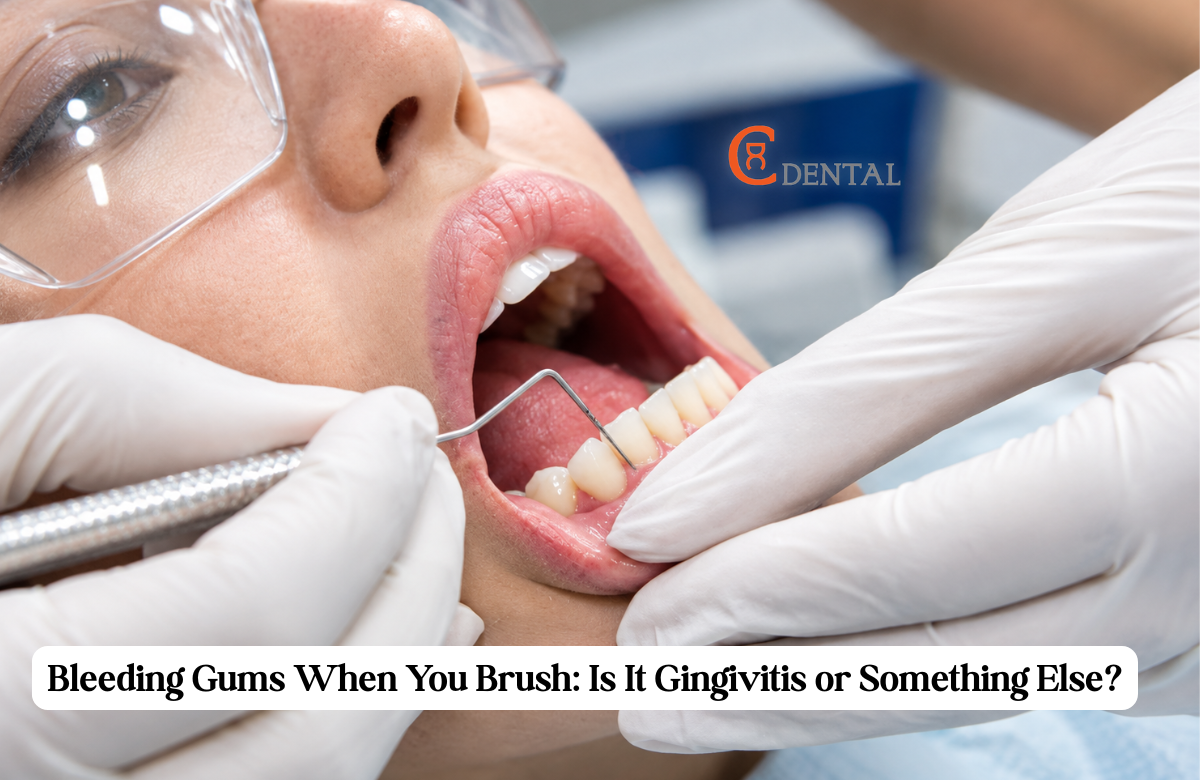

Seeing a bit of pink in the sink after brushing is one of those moments people tend to explain away in half a second. Brushed too hard, probably. New toothbrush, maybe. It’s rarely the first thought that something might actually be wrong. But healthy gums, on their own, don’t bleed. If it’s happening regularly, even just now and then, it’s your mouth trying to tell you something, and it’s worth actually listening.
The good news is that bleeding gums are usually caused by something very treatable. The less good news is that “usually” isn’t “always,” and telling the difference matters.
The Most Common Cause: Gingivitis
For the vast majority of people, bleeding gums point to gingivitis, the earliest and mildest stage of gum disease. It starts with plaque, a sticky film of bacteria that builds up along the gumline whenever brushing and flossing aren’t quite thorough enough. Left in place for even a few days, plaque begins to irritate the gum tissue, causing inflammation, redness, and the kind of bleeding that shows up when you brush or floss.
Gingivitis symptoms tend to be fairly recognizable once you know what to look for:
- Gums that bleed during brushing or flossing, even with gentle pressure
- Redness or a deeper pink than the healthy pale pink of normal gum tissue
- Mild swelling or puffiness along the gumline
- Gums that feel tender to the touch
- Breath that doesn’t fully freshen up even after brushing
What makes gingivitis worth catching early is that, unlike more advanced gum disease, it’s fully reversible. The bone and tissue that anchor your teeth haven’t been damaged yet at this stage, so with better brushing habits, consistent flossing, and a professional cleaning or two, gingivitis genuinely goes away rather than just being managed.
Why Gingivitis Often Gets Ignored
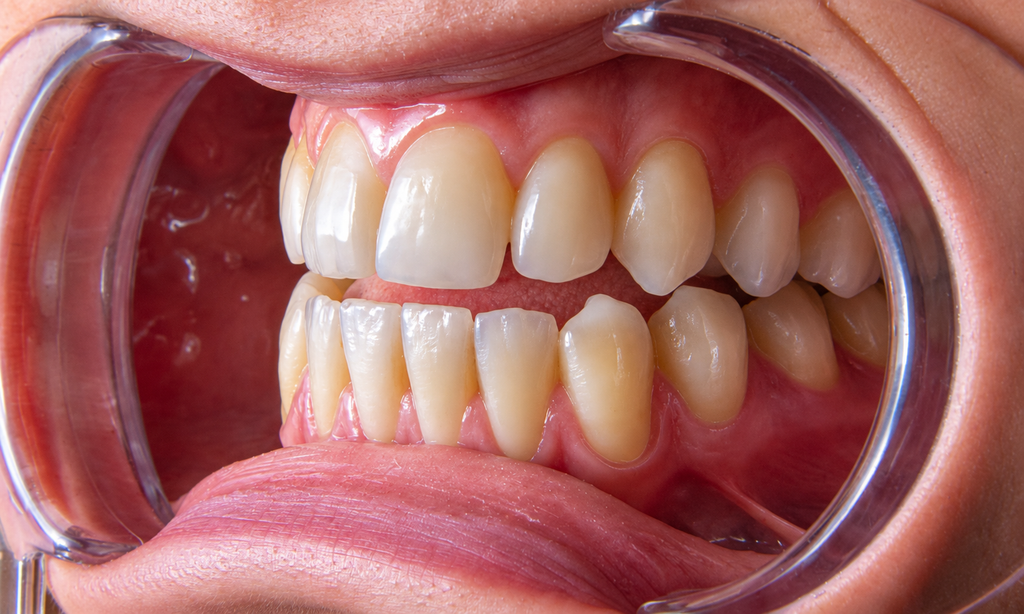
Part of the reason gingivitis is so widespread is that it typically doesn’t hurt. There’s no sharp pain pushing you toward the dentist, just a bit of bleeding that’s easy to dismiss as normal. That painless quality is exactly why it can quietly progress if nothing changes, not because the condition is dangerous on its own, but because plaque left untreated doesn’t stay in one place.
When It’s More Than Gingivitis: Periodontitis
If gingivitis goes unaddressed for long enough, the bacteria causing the inflammation can begin moving below the gumline, where it starts affecting the bone and connective tissue holding your teeth in place. At that point, it’s no longer gingivitis, it’s periodontitis, and the distinction matters because periodontitis causes damage that isn’t fully reversible the way early gingivitis is.
Signs that bleeding might have progressed beyond gingivitis include:
- Gums that appear to be pulling away or receding from the teeth
- Teeth that feel slightly loose or shifted
- Persistent bad breath that doesn’t improve with brushing
- Pain when chewing, or a bite that suddenly feels different
- Visible gaps forming between teeth that weren’t there before
- Pus or discharge near the gumline
Periodontitis is still treatable, usually through a deeper professional cleaning called scaling and root planing, sometimes alongside antibacterial treatment, but the goal shifts from reversing the condition to stopping it from progressing further and protecting what’s still healthy.
Why Do Gums Bleed More When Flossing Specifically?
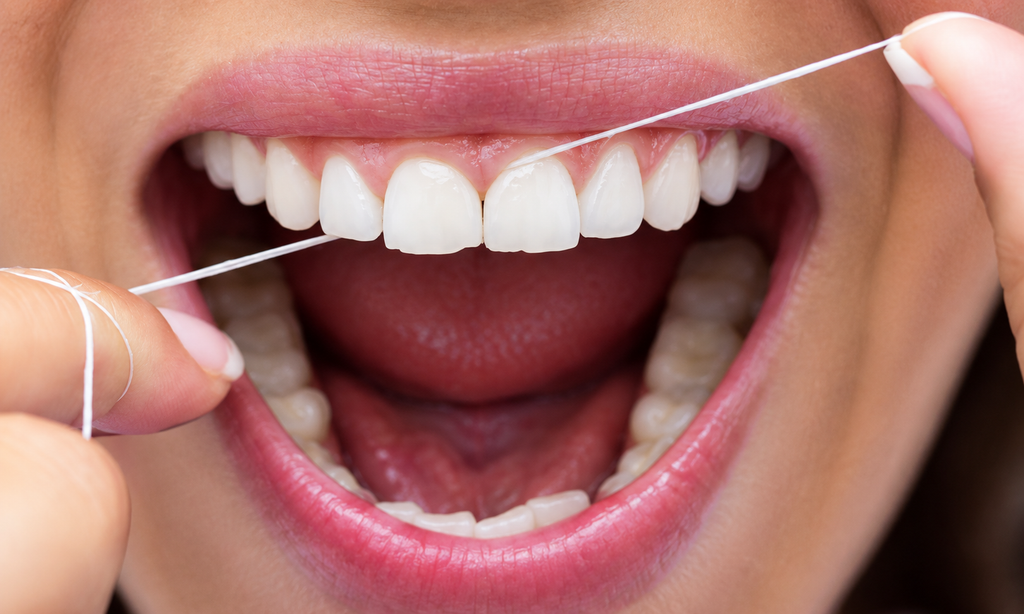
This comes up constantly, and it’s a fair question, especially for people who floss inconsistently. If your gums bleed noticeably more when flossing than brushing, it’s often simply because flossing reaches areas your toothbrush physically can’t, the tight spaces between teeth where plaque builds up fastest. Inflamed tissue in those spots bleeds more easily when finally disturbed.
The common instinct is to stop flossing because it causes bleeding, but that tends to make things worse, not better. Skipping the area that’s already inflamed just gives plaque more time to build up further. In most cases, consistent daily flossing actually reduces the bleeding within one to two weeks, as the gum tissue heals and becomes less inflamed overall.
When Bleeding Gums Aren’t About Gum Disease at All
Gum disease explains most cases, but not all of them, and it’s worth knowing what else can be behind it, particularly if your oral hygiene is already solid and the bleeding still isn’t improving.
Brushing technique. A toothbrush that’s too firm, or brushing with too much pressure, can irritate healthy gum tissue enough to cause occasional bleeding without any underlying disease at all.
Hormonal changes. Shifts during puberty, pregnancy, or menopause can increase blood flow and sensitivity in gum tissue, making bleeding more likely even with an unchanged hygiene routine.
Vitamin deficiencies. Low vitamin C or vitamin K can affect how well your gums heal and how easily they bleed, since both play a role in tissue health and normal clotting.
Blood-related conditions. Less commonly, bleeding gums can be linked to conditions that affect blood clotting, or to certain blood-thinning medications, which make bleeding anywhere in the body, including the gums, more noticeable.
Diabetes. Poorly managed blood sugar can make gum tissue more prone to inflammation and slower to heal, creating a cycle where gum disease and blood sugar control affect each other.
Teeth grinding. In some cases, grinding or clenching puts enough pressure on gum tissue to contribute to irritation and bleeding around specific teeth.
None of this means you should self-diagnose based on a list. It means that if bleeding continues despite genuinely good oral hygiene, it’s worth mentioning to a dentist rather than assuming it’s simply gum disease that hasn’t responded yet.
What to Do If Your Gums Are Bleeding
A few steps make a real difference for most people, particularly when caught at the gingivitis stage:
- Brush twice daily with a soft-bristled toothbrush, using gentle, circular motions rather than aggressive back-and-forth scrubbing
- Floss once a day, even if it causes some bleeding initially, since consistency is what actually resolves the inflammation
- Consider an antibacterial mouthwash if recommended by your dentist, which can help reduce the bacteria contributing to inflammation
- Book a professional cleaning, since plaque that’s hardened into tartar can’t be removed by brushing and flossing alone
- Track whether bleeding improves over one to two weeks of consistent care, which helps determine whether it’s simple gingivitis or something that needs a closer look
Why Healthy Gums Matter Beyond Your Mouth
Gum health isn’t purely a dental concern. Long-term gum inflammation has been studied in connection with several broader health areas, including how well diabetes is managed, cardiovascular health, and in some research, pregnancy outcomes. This doesn’t mean bleeding gums are automatically a sign of a serious systemic issue, but it’s part of why dentists take the symptom seriously rather than treating it as purely cosmetic.
Frequently Asked Questions
Q: Is it normal for gums to bleed a little every time I brush?
A: No. Occasional light bleeding after a rougher brushing session can happen, but regular bleeding, even mild, usually points to gum inflammation that’s worth addressing rather than something to expect as normal.
Q: How long does it take for gingivitis to heal?
A: With consistent brushing and flossing, most people notice improvement within one to two weeks, though a professional cleaning speeds up recovery by removing plaque and tartar that home care can’t reach.
Q: Should I stop flossing if it makes my gums bleed?
A: No, that usually makes the underlying inflammation worse. Gentle, consistent flossing typically reduces bleeding within a couple of weeks as gum health improves.
Q: Can stress cause bleeding gums?
A: Indirectly, yes. Stress can weaken the immune response and, in some people, lead to teeth grinding, both of which can make gums more prone to irritation and bleeding.
Q: When should I see a dentist about bleeding gums?
A: If bleeding persists for more than two weeks despite good oral hygiene, or if you notice gum recession, loose teeth, or persistent bad breath alongside it, it’s time for a proper evaluation rather than waiting it out.
Gum Health Care at C Dental Clinic

At C Dental Clinic in Al Nahda, Sharjah, a gum evaluation looks at more than just whether bleeding is present, it considers your overall oral hygiene, any contributing habits, and whether what you’re experiencing points to early gingivitis or something that needs deeper treatment. Catching it early is really the whole game here, since gingivitis is fully reversible while periodontitis is not.
👉 Book a consultation at C Dental Clinic if your gums have been bleeding regularly.



Leave a Reply